Author:

  • What is Graph Theory?

    Introduction Graph Theory is a branch of Discrete Mathematics that studies graphs, which are mathematical structures used to represent relationships between interconnected entities. By modeling objects as vertices (nodes) and the relationships between them as edges (links), Graph Theory provides a systematic framework for analyzing connectivity, communication, dependencies, and interactions. Although Graph Theory originated as…

  • Understanding the OSI Layers

    Introduction Modern computer networks enable billions of devices to communicate and exchange information across homes, businesses, governments, educational institutions, and the Internet. Whether sending an email, browsing a website, streaming a video, making a video call, or accessing cloud services, every network communication follows a structured process to ensure that data reaches its intended destination…

  • International Organization for Standardization (ISO)

    The International Organization for Standardization (ISO) develops international standards that establish common requirements, specifications, guidelines, and practices across diverse fields. Its standards support interoperability, consistency, quality, safety, and efficiency, covering areas ranging from technology and information security to manufacturing, healthcare, and environmental management.

  • Understand Audit And Compliance

    Introduction Audit and compliance are fundamental disciplines that promote accountability, transparency, integrity, and continual improvement. They provide structured mechanisms for evaluating activities, verifying conformity with established requirements, assessing the effectiveness of controls, and providing confidence that responsibilities are performed consistently and objectively. The principles of audit and compliance are universal and apply across commercial enterprises,…

  • Understanding Enterprise Security GRC

    Enterprise Security GRC establishes a structured approach to govern security, manage cybersecurity risks, and maintain compliance across the enterprise. It aligns security leadership, policies, controls, risk management, audits, architecture, investment, and performance measurement to support accountable decision-making, regulatory obligations, effective security oversight, and continuous improvement.

  • Understanding Supply Chain Management (SCM)

    Supply Chain Management coordinates sourcing, procurement, production, inventory, warehousing, transportation, distribution, and customer service across the supply chain. It helps organizations improve efficiency, manage costs, strengthen resilience, enhance visibility, support collaboration, and respond to changing demand, operational disruptions, technology needs, and security risks across interconnected supply chain activities.

  • Understanding Industry

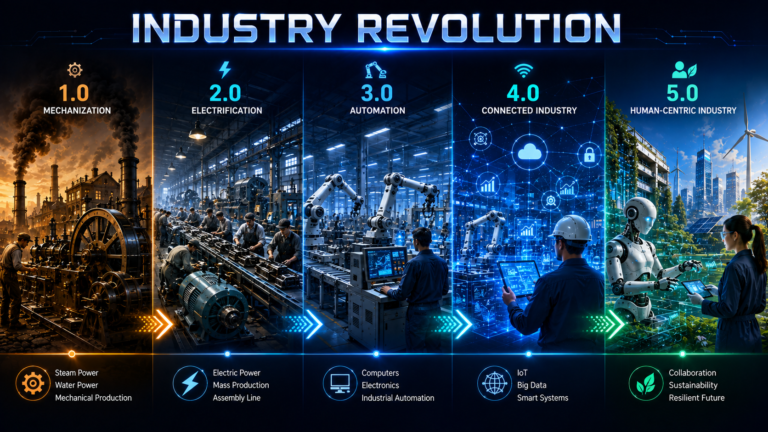
    An industry is a group of organizations and economic activities involved in producing goods or delivering services within a particular sector. Industries form an essential part of the economy by using resources, technology, infrastructure, and human capabilities to create economic value. Understanding industries, their classifications, operating models, supply chains, evolution, and digital transformation provides a foundation for understanding how modern economies function.

  • Understanding Economy

    An economy is a system of interconnected activities through which resources are used to produce, distribute, exchange, and consume goods and services. It consists of economic agents, markets, industries, enterprises, infrastructure, natural resources, energy, and technology that collectively support economic activity and development.

  • Understanding Enterprise

    Introduction Enterprises are established to achieve common goals and strategic objectives by bringing together people, business functions, processes, information, technology, and governance into a coordinated system. They exist across every sector of society, including commercial businesses, government agencies, educational institutions, healthcare providers, financial institutions, non-profit organizations, and multinational corporations. Regardless of their size, industry, or…