Understanding Critical Infrastructure Security
Introduction
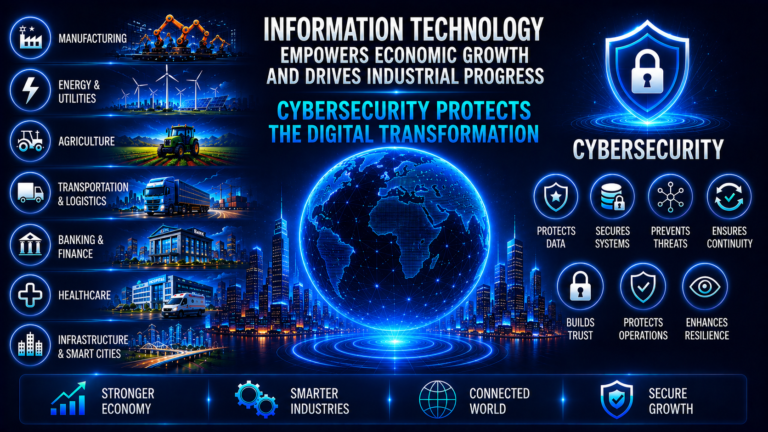
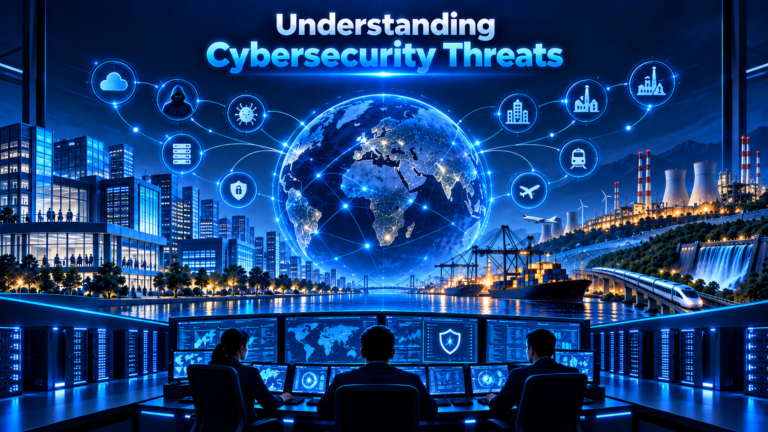
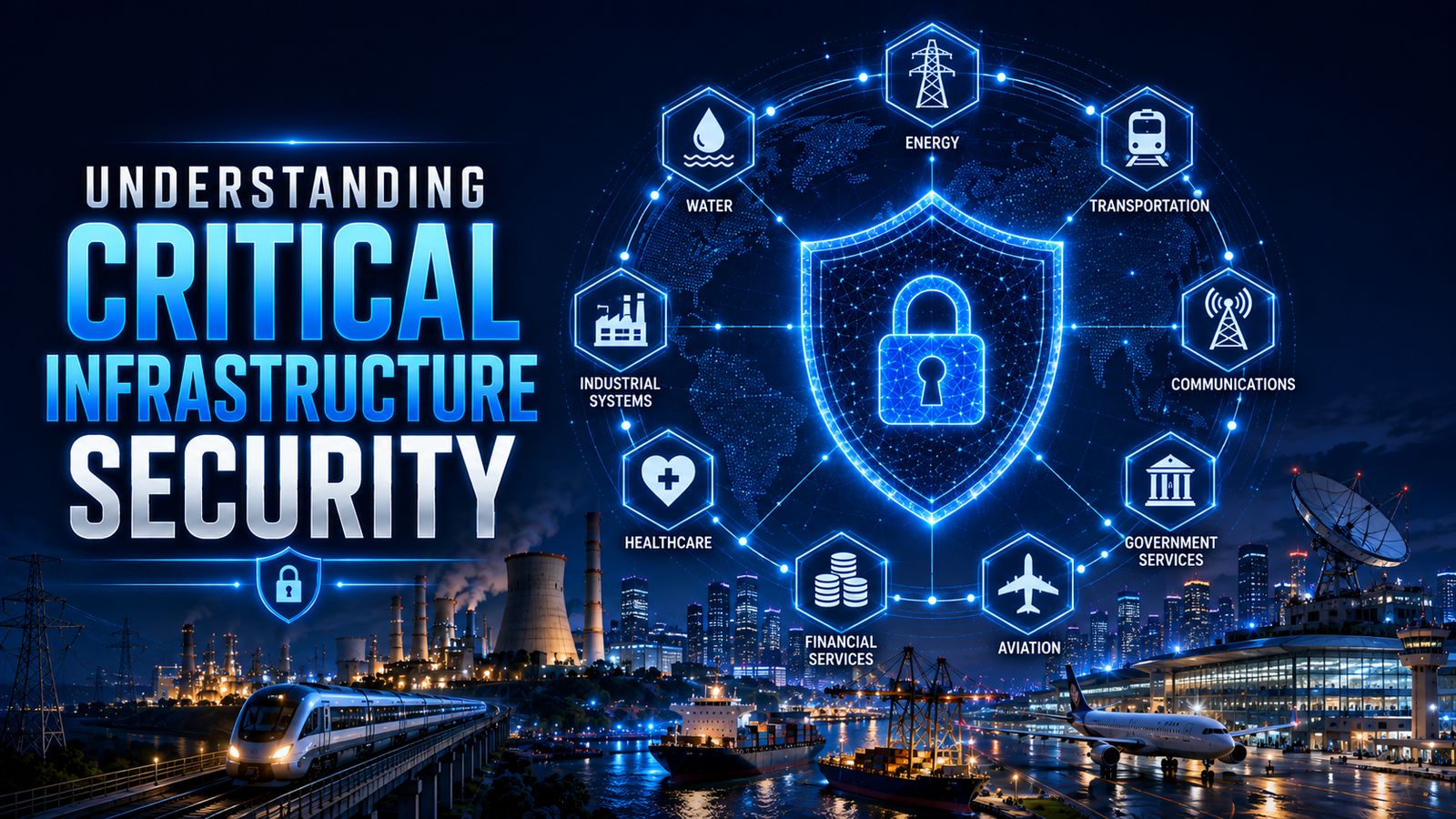
Critical infrastructure consists of the systems, facilities, networks, technologies, and services that are essential to the functioning of society. These include energy, water, transportation, healthcare, communications, financial services, government services, information technology, manufacturing, and other capabilities whose disruption can have significant consequences.
Critical Infrastructure Security is broader than conventional cybersecurity. It involves protecting physical infrastructure, information systems, operational technology, industrial control systems, communications networks, people, processes, and supporting supply chains against cyber, physical, environmental, and operational threats.
The security of critical infrastructure is closely connected with availability, safety, reliability, resilience, and continuity of essential services. A security incident affecting an ordinary information system may primarily result in data loss or service disruption, whereas an incident affecting critical infrastructure can potentially affect public safety, economic activity, national security, or essential services. CISA describes critical infrastructure as a complex, interconnected ecosystem in which disruption can have significant consequences for national security, economic security, public health, and public safety.
What Is Critical Infrastructure?
Critical infrastructure consists of assets, systems, networks, facilities, and services that are essential to the functioning of society and the delivery of important services.
The exact definition and classification of critical infrastructure varies between countries because each country determines which services and capabilities are considered essential to its national interests.
Critical infrastructure can include:
- Electricity generation, transmission, and distribution
- Oil and gas infrastructure
- Water supply and wastewater systems
- Transportation systems
- Telecommunications and communications
- Healthcare services
- Financial services
- Government services
- Information technology infrastructure
- Manufacturing and industrial systems
- Emergency services
- Food and agricultural systems
- Critical supply chains
Critical infrastructure is not necessarily a single facility or technology. It is often an interconnected ecosystem containing physical assets, digital systems, communications networks, people, processes, and external dependencies.
For example, an electricity distribution system may depend on control systems, telecommunications, data centers, software, physical substations, engineering systems, third-party services, and equipment supply chains.
This interdependency makes Critical Infrastructure Security a systems-level discipline.
What Is Critical Infrastructure Security?
Critical Infrastructure Security is the discipline of protecting critical infrastructure and the systems that support essential services from threats that could compromise confidentiality, integrity, availability, safety, reliability, or resilience.
It combines several areas of security, including:
- Cybersecurity
- Information security
- Network security
- Operational technology security
- Industrial control systems security
- Physical security
- Identity and access security
- Application and software security
- Data security
- Supply chain security
- Risk management
- Business continuity
- Disaster recovery
- Incident response
- Resilience engineering
Critical Infrastructure Security therefore cannot be treated solely as an information security problem.
A power plant, water treatment facility, railway system, telecommunications network, or industrial facility may contain traditional IT systems alongside operational technologies that directly interact with physical processes.
Security must account for both environments and, more importantly, the interactions between them.
Why Critical Infrastructure Security Is Important
The importance of Critical Infrastructure Security comes from the consequences of disruption.
Critical infrastructure supports fundamental activities such as producing electricity, providing clean water, transporting people and goods, delivering healthcare, enabling communications, and supporting financial transactions.
A disruption can therefore propagate beyond the initially affected system.
For example, disruption of an electricity service can affect:
- Communications
- Transportation
- Healthcare
- Water treatment
- Financial services
- Data centers
- Emergency services
- Industrial operations
This creates a direct relationship between security and societal resilience.
Critical infrastructure security therefore aims not only to prevent incidents but also to ensure that essential services can continue operating and can recover when preventive controls fail. CISA defines resilience in terms of preparing for threats and hazards, adapting to changing conditions, withstanding disruption, and recovering from adverse conditions.
Critical Infrastructure Sectors
Critical infrastructure sectors differ by country and regulatory framework.
For example, the United States identifies 16 critical infrastructure sectors that form part of a complex and interconnected ecosystem.
A broader sector view can include:
- Energy
- Water and wastewater
- Transportation
- Communications
- Healthcare and public health
- Financial services
- Information technology
- Manufacturing
- Government services
- Emergency services
- Food and agriculture
- Critical commercial facilities
These sectors should not be viewed as isolated categories. They frequently depend upon one another.
For example, transportation systems may depend on electricity and communications, healthcare facilities may depend on electricity, water, communications, and information systems, while telecommunications infrastructure may depend on power and physical facilities.
The resulting dependencies mean that the security of one sector can influence the resilience of another.
Information Technology and Operational Technology
One of the most important concepts in Critical Infrastructure Security is the relationship between Information Technology (IT) and Operational Technology (OT).
IT systems primarily process, store, transmit, and manage information.
OT systems monitor and control physical processes or interact directly with the physical environment.
Examples of IT include:
- Servers
- Databases
- Enterprise applications
- Email systems
- User endpoints
- Identity systems
- Business networks
Examples of OT include:
- Programmable Logic Controllers (PLCs)
- Distributed Control Systems (DCS)
- Supervisory Control and Data Acquisition (SCADA)
- Industrial sensors
- Actuators
- Human-Machine Interfaces (HMIs)
- Industrial network equipment
- Building automation systems
- Transportation control systems
The distinction is important because OT environments often have requirements that differ significantly from traditional IT environments.
NIST SP 800-82 Rev. 3 provides guidance for securing OT while addressing its unique performance, reliability, and safety requirements. The guidance covers industrial control systems, building automation systems, transportation systems, physical access control systems, and other technologies that interact with the physical environment.
Industrial Control Systems and SCADA
Industrial Control Systems (ICS) are systems used to monitor and control industrial processes.
Important categories include:
- SCADA systems
- Distributed Control Systems
- Programmable Logic Controllers
- Remote Terminal Units
- Industrial control networks
- Human-Machine Interfaces
SCADA systems are commonly used for geographically distributed infrastructure such as utilities, pipelines, water systems, and electrical networks.
DCS environments are commonly associated with continuous or complex industrial processes.
PLCs are specialized controllers that interact directly with industrial equipment and processes.
The security of these systems requires more than simply applying conventional IT security controls. Availability, deterministic operation, safety, equipment limitations, legacy technologies, and operational requirements must all be considered.
NIST SP 800-82 Rev. 3 specifically addresses OT security and includes ICS technologies such as SCADA, DCS, and PLC-based systems.
Cyber-Physical Systems
Critical infrastructure increasingly consists of cyber-physical systems, where digital technologies interact directly with physical processes.
A cyber-physical system can contain:
- Sensors
- Controllers
- Communication networks
- Software
- Actuators
- Physical equipment
- Monitoring systems
- Human operators
For example, a water treatment process may use sensors to measure conditions, controllers to make decisions, and actuators to control physical equipment.
A cybersecurity compromise can therefore potentially produce a physical consequence.
This is one of the fundamental differences between protecting ordinary information systems and protecting critical infrastructure.
Interdependencies and Dependencies
Critical infrastructure is highly interconnected.
A system may depend on another system for:
- Electricity
- Communications
- Internet connectivity
- Cloud services
- Fuel
- Transportation
- Hardware
- Software
- Data
- Personnel
- External suppliers
- Environmental conditions
These relationships create dependencies and interdependencies.
A dependency exists when one system requires another system to function.
An interdependency exists when multiple systems depend upon one another.
For example, telecommunications may depend on electricity, while electricity infrastructure may depend on telecommunications for monitoring and control.
This creates the possibility of cascading failures.
Critical infrastructure security must therefore consider not only individual assets but also relationships between assets, systems, sectors, and external dependencies. CISA’s Infrastructure Resilience Planning Framework specifically addresses dependencies, cascading disruptions, and the need to incorporate these considerations into infrastructure planning and investment decisions.
Critical Infrastructure Threat Landscape
Critical infrastructure can face a broad range of threats.
Cyber Threats
These include:
- Malware
- Ransomware
- Phishing
- Credential compromise
- Unauthorized access
- Exploitation of vulnerabilities
- Denial-of-service attacks
- Supply chain compromise
- Insider threats
- Destructive attacks
- Remote access abuse
Physical Threats
These include:
- Unauthorized physical access
- Sabotage
- Theft
- Equipment damage
- Tampering
- Vandalism
Environmental Threats
These can include:
- Floods
- Storms
- Earthquakes
- Extreme temperatures
- Fires
- Other natural hazards
Operational Threats
Examples include:
- Equipment failure
- Configuration errors
- Software defects
- Human error
- Inadequate maintenance
- Loss of supporting services
The most significant risks can occur when multiple threat categories interact.
For example, a physical disruption may cause a cybersecurity system to become unavailable, while a cyber incident may cause physical equipment to operate incorrectly.
Common Vulnerabilities and Security Challenges
Critical infrastructure environments often present unique security challenges.
Legacy Systems
Some OT environments contain systems designed before today’s cybersecurity requirements were common.
Replacing these systems may be difficult because they can be expensive, operationally sensitive, or difficult to take offline.
Long System Lifecycles
Industrial equipment may remain operational for many years.
This creates challenges involving:
- Unsupported software
- Legacy protocols
- Limited security capabilities
- Hardware replacement
- Patch compatibility
Availability Requirements
Traditional IT environments may tolerate planned downtime for maintenance.
Certain critical infrastructure systems cannot easily be taken offline.
Security controls must therefore be implemented without unnecessarily disrupting essential operations.
Safety Requirements
In many OT environments, cybersecurity decisions can affect physical safety.
Security controls must therefore be evaluated alongside safety requirements.
Limited Visibility
Infrastructure environments may not have complete visibility into every device, connection, application, or communication path.
Without accurate asset visibility, effective risk management becomes difficult.
IT and OT Convergence
Connectivity between IT and OT can improve operational efficiency and visibility but can also increase the potential attack surface.
Third-Party Dependencies
Critical infrastructure frequently depends on vendors, service providers, telecommunications providers, software suppliers, equipment manufacturers, and other external parties.
A weakness in one component can affect the larger ecosystem.
Security Objectives for Critical Infrastructure
Critical Infrastructure Security extends beyond the traditional CIA triad.
The Confidentiality, Integrity, and Availability model remains important, but other objectives can become equally significant.
Confidentiality
Protect sensitive information from unauthorized disclosure.
Integrity
Ensure that information, configurations, commands, and system states are accurate and trustworthy.
Availability
Ensure that essential systems and services remain available when required.
Safety
Prevent cybersecurity incidents from causing unacceptable physical harm to people, equipment, or the environment.
Reliability
Ensure that systems consistently perform their intended functions.
Resilience
Ensure that essential functions can continue during disruption and that systems can recover effectively.
Continuity
Maintain essential services during and after disruptive events.
The relative importance of these objectives varies according to the infrastructure type and the consequences of failure.
Critical Infrastructure Security Architecture
Security architecture provides the structural foundation for protecting critical infrastructure.
A security architecture should consider:
- Asset classification
- Network architecture
- IT and OT boundaries
- Security zones
- Trust boundaries
- Identity
- Access paths
- Remote connectivity
- Monitoring
- Data flows
- Physical security
- Resilience
- Recovery
- External dependencies
Architecture should begin with understanding how the infrastructure actually operates.
Security controls should then be designed around the functions, risks, dependencies, and consequences associated with those systems.
A critical infrastructure security architecture should also account for the difference between systems that process information and systems that directly influence physical processes.
Network Segmentation and Zone-Based Security
Network segmentation is an important principle for Critical Infrastructure Security.
Instead of allowing unrestricted connectivity between systems, infrastructure can be separated into logical or physical security zones.
For example:
- Corporate IT zone
- Enterprise services zone
- Industrial DMZ
- Supervisory zone
- Control zone
- Safety systems zone
- Remote access zone
Communication between zones should be explicitly controlled.
Firewalls, access controls, secure gateways, monitoring systems, and other mechanisms can be used to regulate communication.
The objective is to reduce unnecessary connectivity and limit the ability of an attacker to move from one environment to another.
Segmentation is particularly important where IT and OT systems interact.
Identity and Access Security
Access to critical infrastructure should be strongly controlled.
Important security principles include:
- Least privilege
- Strong authentication
- Role-based access
- Privileged access management
- Account lifecycle management
- Access reviews
- Separation of duties
- Controlled remote access
- Session monitoring
Administrative access to critical systems should receive particular attention because compromised privileged credentials can provide significant control over infrastructure.
Remote access is another important consideration because maintenance personnel, vendors, engineers, and administrators may require access to geographically distributed systems.
Asset Management
Effective security begins with knowing what needs to be protected.
Critical infrastructure asset management should identify:
- Hardware
- Software
- Network devices
- Controllers
- Sensors
- Applications
- Communication links
- Physical facilities
- Cloud services
- External dependencies
Assets should be classified according to factors such as:
- Criticality
- Function
- Location
- Owner
- Connectivity
- Operational impact
- Safety impact
- Security requirements
An accurate asset inventory provides the foundation for vulnerability management, segmentation, monitoring, incident response, and recovery.
Vulnerability and Patch Management
Vulnerability management in critical infrastructure requires careful risk-based decision-making.
Applying a patch immediately may not always be possible in an operational environment.
Before changes are made, factors such as the following may need to be considered:
- System criticality
- Vendor support
- Patch availability
- Compatibility
- Testing requirements
- Operational impact
- Safety implications
- Maintenance windows
- Availability of compensating controls
Where patching cannot be performed safely, other controls may be necessary, such as segmentation, access restriction, monitoring, application controls, or isolation.
NIST’s OT security guidance recognizes that security controls need to account for operational requirements, including performance, reliability, and safety.
Security Monitoring and Detection
Monitoring provides visibility into security events and abnormal activity.
Critical infrastructure monitoring can include:
- Network monitoring
- Authentication monitoring
- Endpoint monitoring
- System logs
- Application logs
- OT network monitoring
- Configuration monitoring
- Industrial protocol monitoring
- Physical security events
Detection should focus not only on known attacks but also on unusual behavior.
Examples include:
- Unexpected remote access
- Unusual communication between zones
- Unauthorized configuration changes
- Abnormal controller activity
- Unexpected account usage
- Changes to critical systems
- Unusual traffic patterns
Monitoring should be designed carefully so that security mechanisms do not interfere with operational processes.
Incident Response
Incident response for critical infrastructure requires coordination between cybersecurity, IT, OT, engineering, safety, physical security, communications, and management functions.
A response process should address:
- Preparation
- Detection
- Analysis
- Containment
- Eradication
- Recovery
- Lessons learned
However, containment decisions in OT environments can be more complex than in ordinary IT.
Disconnecting a compromised system may prevent further cyber activity but could also disrupt a physical process.
Incident response therefore needs to consider both cyber consequences and operational consequences.
Resilience and Recovery
Security cannot guarantee that every incident will be prevented.
Critical infrastructure therefore needs resilience.
Resilience includes the ability to:
- Resist disruption
- Absorb impact
- Maintain essential functions
- Adapt to changing conditions
- Recover critical capabilities
- Restore normal operations
Recovery planning should consider:
- Backup systems
- Redundancy
- Alternate communication paths
- Spare equipment
- Recovery procedures
- System restoration
- Emergency operations
- Manual operating procedures
- Recovery priorities
Recovery strategies should be tested periodically so that assumptions can be validated before an actual incident occurs.
Resilience planning should also consider dependencies between infrastructure systems because disruption in one service may affect the ability to recover another. CISA’s resilience guidance emphasizes coordinated planning, assessment, and consideration of dependencies when improving infrastructure resilience.
Physical Security
Cybersecurity and physical security are closely connected in critical infrastructure.
Physical access to critical systems can provide opportunities to:
- Tamper with equipment
- Access network connections
- Install unauthorized devices
- Steal equipment
- Damage systems
- Bypass logical controls
Physical security may therefore include:
- Perimeter security
- Controlled entry
- Security personnel
- Surveillance
- Environmental monitoring
- Equipment protection
- Visitor management
- Secure server and control rooms
- Protection of communication facilities
Physical and logical security should be considered together rather than as completely separate disciplines.
Supply Chain Security
Critical infrastructure depends on a large ecosystem of suppliers.
This can include:
- Hardware manufacturers
- Software developers
- Equipment suppliers
- System integrators
- Maintenance providers
- Cloud providers
- Telecommunications providers
- Managed service providers
Supply chain security considers risks introduced before a component reaches the infrastructure environment and during its operational lifecycle.
Important considerations include:
- Supplier security requirements
- Software integrity
- Hardware provenance
- Vulnerability disclosure
- Third-party access
- Remote maintenance
- Software updates
- Dependency management
- Supplier resilience
Supply chain risk is particularly important because an infrastructure environment may contain numerous components originating from multiple suppliers.
Governance, Risk, and Compliance
Critical Infrastructure Security requires governance because security decisions affect operational, safety, financial, regulatory, and societal risks.
Governance establishes:
- Security objectives
- Roles and responsibilities
- Policies
- Risk appetite
- Security requirements
- Accountability
- Oversight
- Reporting
- Compliance expectations
Risk management identifies threats, vulnerabilities, dependencies, and potential consequences.
Compliance addresses applicable laws, regulations, standards, contractual requirements, and sector-specific obligations.
These activities should work together rather than operate as independent functions.
Standards and Security Frameworks
Several established frameworks and standards can support Critical Infrastructure Security.
NIST Cybersecurity Framework
The NIST Cybersecurity Framework provides a structured approach for managing cybersecurity risk. CSF 2.0 is designed for organizations across sectors and provides a common taxonomy of high-level cybersecurity outcomes without prescribing specific technologies or implementation methods.
Although the framework was originally developed in the context of critical infrastructure, CSF 2.0 is now intended for broader use across industries and organizational types.
NIST SP 800-82
NIST SP 800-82 Rev. 3 provides specialized guidance for securing Operational Technology environments.
It addresses systems including:
- Industrial Control Systems
- SCADA
- Distributed Control Systems
- Programmable Logic Controllers
- Building automation
- Transportation systems
- Physical access control systems
The guidance considers the unique performance, reliability, and safety requirements associated with OT.
NIST initiated the process of revising SP 800-82 in January 2026 to incorporate lessons learned, align the publication with newer NIST guidance and OT cybersecurity practices, and address changes in the OT threat landscape.
Sector-Specific Frameworks
Different critical infrastructure sectors may also use specialized standards, regulations, control frameworks, and technical guidance appropriate to their environments.
The appropriate framework depends on the infrastructure type, jurisdiction, technology, risk profile, and regulatory environment.
Critical Infrastructure Security Lifecycle
Critical Infrastructure Security should be treated as a continuous activity rather than a one-time implementation.
Important activities include:
Identify
Understand assets, systems, services, dependencies, threats, vulnerabilities, and consequences.
Assess
Evaluate cybersecurity, physical, operational, environmental, and supply chain risks.
Protect
Implement appropriate preventive and protective controls.
Detect
Monitor infrastructure and identify abnormal or malicious activity.
Respond
Contain and manage security incidents while protecting essential operations.
Recover
Restore systems and services while learning from the incident.
These activities align with the broader risk-management approach of the NIST Cybersecurity Framework, while specialized OT guidance provides additional considerations for environments where digital systems interact with physical processes.
Challenges in Securing Critical Infrastructure
Critical Infrastructure Security presents several challenges.
Complexity
Infrastructure consists of interconnected technologies, facilities, suppliers, networks, and operational processes.
Legacy Technology
Older systems may lack modern security capabilities.
Availability and Safety
Security controls cannot be designed without considering operational continuity and safety.
Interdependencies
A failure in one sector can affect other sectors.
Limited Maintenance Windows
Some systems cannot easily be taken offline for upgrades or security maintenance.
Expanding Connectivity
Increasing connectivity between IT, OT, cloud services, remote access, and external systems can increase exposure.
Supply Chain Risk
Security depends partly on the reliability and security practices of external suppliers.
Skill Requirements
Critical infrastructure security requires knowledge across cybersecurity, networking, industrial systems, engineering, safety, risk, and operations.
These challenges demonstrate why Critical Infrastructure Security requires multidisciplinary expertise.
Conclusion
Critical Infrastructure Security is a multidisciplinary field concerned with protecting the systems and services on which society depends.
It brings together cybersecurity, operational technology security, physical security, risk management, resilience, safety, supply chain security, governance, and incident response.
The increasing interconnection between IT, OT, communications, cloud services, industrial systems, and physical infrastructure means that security can no longer be considered only at the individual-system level.
Effective Critical Infrastructure Security requires understanding assets, functions, dependencies, threats, vulnerabilities, consequences, and resilience as parts of a larger system.
For cybersecurity professionals, Critical Infrastructure Security provides an important foundation for understanding how security principles are applied to environments where the consequences of disruption can extend beyond information systems and directly affect essential services, physical processes, public safety, and societal resilience.
References
CISA – Critical Infrastructure Security and Resilience
Provides guidance on protecting critical infrastructure and strengthening the resilience of essential systems, services, and assets.
CISA – Resilience Services
Provides resources and services that support resilience planning, risk management, and protection of critical infrastructure.
CISA – Infrastructure Resilience Planning Framework
Provides a structured approach for understanding infrastructure dependencies, assessing risks, and developing resilience strategies.
NIST – The NIST Cybersecurity Framework (CSF) 2.0
Provides a framework for managing cybersecurity risk and organizing cybersecurity activities around common outcomes.
NIST – Guide to Operational Technology (OT) Security, SP 800-82 Rev. 3
Provides guidance for securing operational technology while considering its unique performance, reliability, safety, and security requirements.
NIST – NIST Publishes SP 800-82, Revision 3
Provides information about the publication and scope of the third revision of NIST’s guidance for OT security.
NIST – Comment on SP 800-82 Revision
Provides information related to NIST’s ongoing work and updates concerning OT security guidance.