Science Foundations

  • Crystal Oscillator

    A crystal oscillator uses the mechanical resonance of a piezoelectric crystal, commonly quartz, to produce a stable and predictable electrical oscillation. Its frequency characteristics make it useful as a timing and frequency reference in electronic systems, including computers, communication equipment, measurement instruments, and embedded devices.

  • Piezoelectricity

    Piezoelectricity is the property of certain materials to generate an electrical response when subjected to mechanical stress. The effect results from changes in charge distribution within the material and enables conversion between mechanical and electrical energy, with applications in sensors, actuators, ultrasonic transducers, frequency control, and other electromechanical systems.

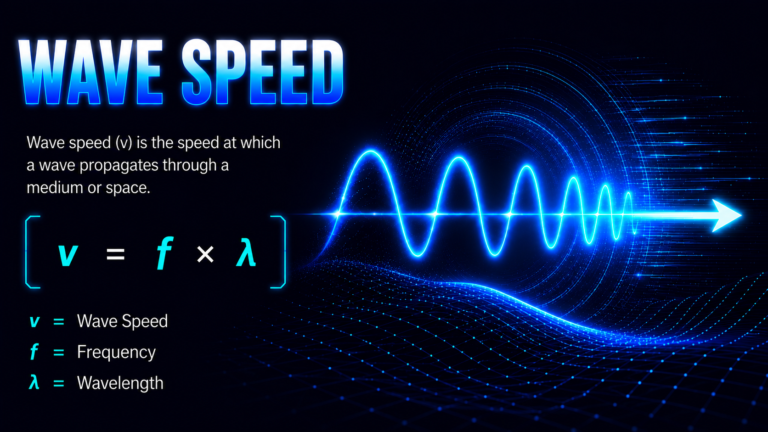
  • Wave Speed

    Wave speed is the rate at which a wave propagates through a medium and is a fundamental property of wave motion. It is determined by the characteristics of the medium, defines the relationship between frequency and wavelength, and forms the basis for understanding the behavior of mechanical and electromagnetic waves.

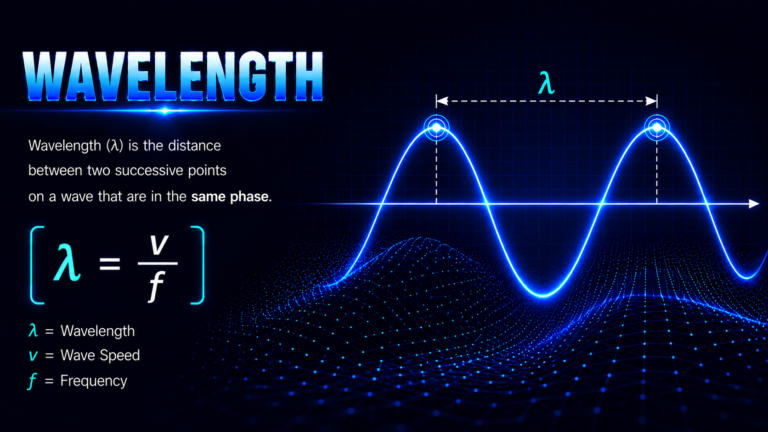
  • Wavelength

    Wavelength is the distance between two corresponding points of consecutive wave cycles and is a fundamental property of wave motion. It determines the spatial characteristics of waves, defines the relationship between wavelength, frequency, and wave speed, and explains how waves propagate through different media.

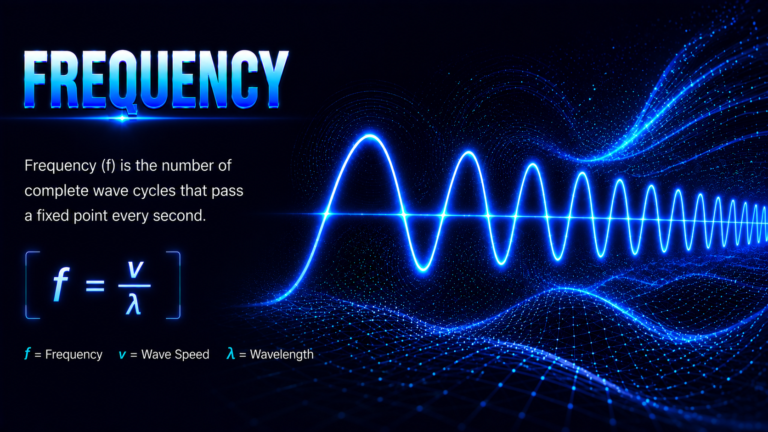
  • Frequency

    Frequency is the number of wave cycles, oscillations, or repeating events that occur within a given period of time and is a fundamental property of wave motion. It defines the relationship between frequency, wavelength, and wave speed, and plays a vital role in science, engineering, communication, and computing.

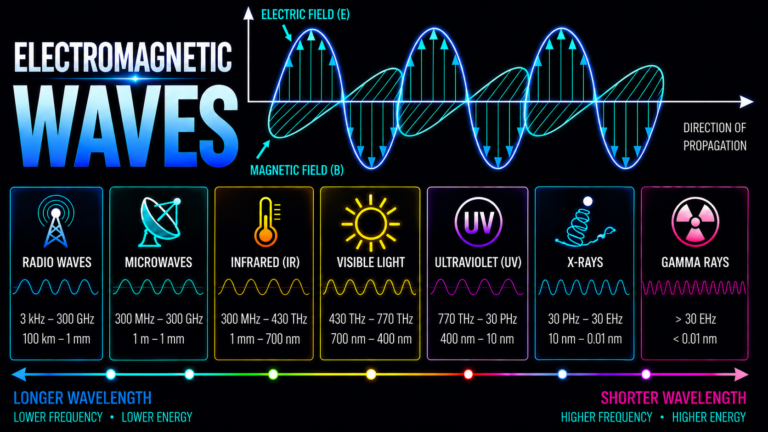
  • Electromagnetic Waves

    Electromagnetic waves are self-propagating oscillations of electric and magnetic fields that transport energy through space without requiring a physical medium. Their generation, propagation, characteristics, and interaction with matter form the foundation for understanding electromagnetic radiation and the electromagnetic spectrum.

  • Energy

    Energy is the capacity to perform work or cause change and is one of the fundamental quantities in physics. It exists in many forms, can be transferred, transformed, and conserved, and provides the foundation for understanding natural phenomena, physical systems, and the interactions that govern the universe.