Discover Cybersecurity Domains

Explore the cybersecurity domains that form the foundation pillars of cybersecurity.
Cybersecurity Domains organize cybersecurity into its fundamental areas of knowledge. They provide the foundation every cybersecurity professional should understand to develop technical knowledge, broaden expertise, and build a successful career in cybersecurity.

Explore →
The essential concepts, technologies, principles, and building blocks that establish a strong understanding of cybersecurity foundations.
Explore→
The policies, frameworks, leadership, and oversight practices that guide and manage organizational cybersecurity effectively.
Explore →
The processes, methodologies, and practices used to identify, assess, treat, and monitor cybersecurity risks across organizations.
Explore →
The controls, assessments, standards, and regulatory practices that evaluate and ensure cybersecurity compliance requirements.
Explore →
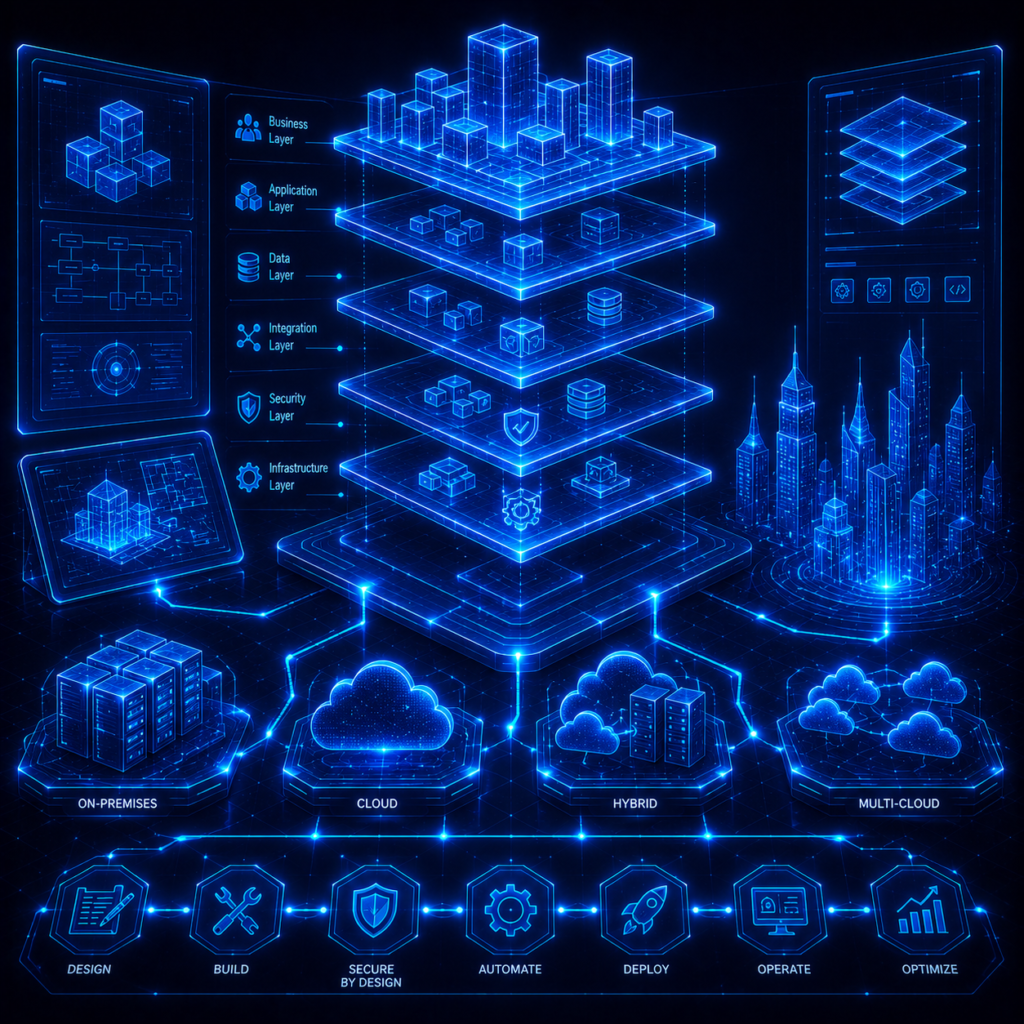
The design principles, frameworks, and engineering practices that build secure, resilient, and scalable systems.
Explore →
The domain covering identity management, authentication, authorization, privileged access, and secure access control across systems.
Explore →
The principles, controls, and practices that protect information and data from unauthorized access, disclosure, alteration, and destruction.
Explore →
The safeguards, controls, and protective measures securing facilities, assets, infrastructure, and operational environments.

Explore →
The technologies, controls, and practices that protect IT systems, infrastructure, platforms, and operational environments.

Explore →
The principles, algorithms, and cryptographic techniques used to secure information, communications, identities, and systems.

Explore →
The technologies, controls, and practices that protect networks, communications, and data from security threats.

Explore →
The technologies, controls, and practices that protect internet-connected systems, services, communications, and data from security threats.

Explore →
The policies, controls, and practices that secure cloud environments while ensuring governance and compliance.
Explore →
The principles, practices, and controls that protect software throughout development, deployment, and maintenance.

Explore →
The processes, technologies, and practices used to detect, analyze, investigate, and respond to threats proactively and effectively.
Explore →
The methodologies, assessments, and testing practices used to identify weaknesses and validate security controls

Explore →
The strategies, plans, and recovery practices that maintain operations and restore services after disruptions.

Explore →
The attack techniques, threat actors, and tactics used to compromise systems, networks, and data across industries worldwide.
Explore →
The legal requirements, regulations, and statutory obligations governing cybersecurity, privacy, and information protection practices.
Explore →
The principles, controls, and practices that protect Artificial Intelligence (AI) systems, models, data, and operations.
Latest Articles
-
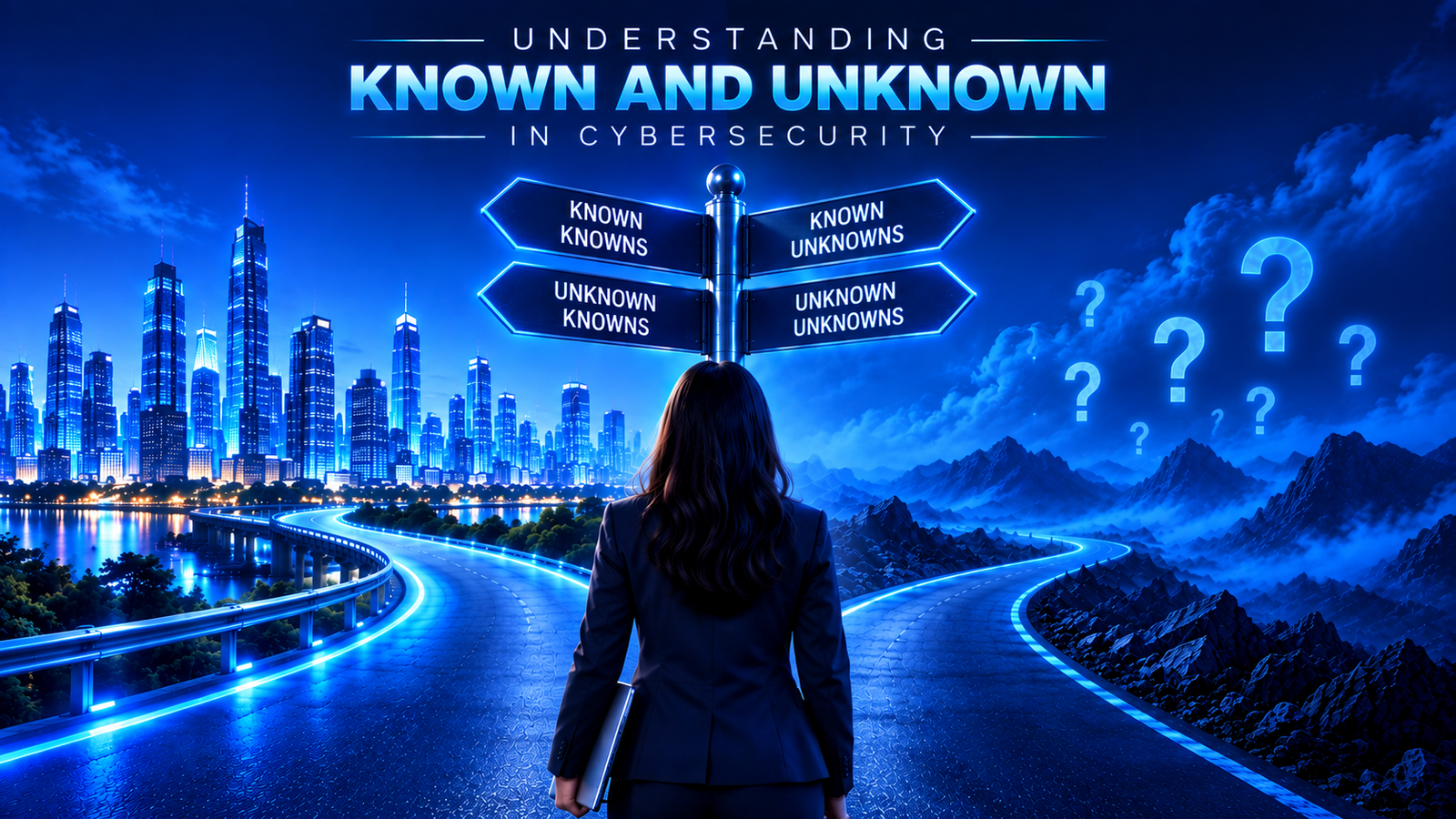
Understanding Known and Unknown in Cybersecurity
Knowns and unknowns influence cybersecurity by shaping how threats, vulnerabilities, risks, and security decisions are understood. Recognizing established facts, identifying uncertainty, uncovering overlooked information, and preparing for unexpected conditions helps improve security awareness and decision-making.
-
Understanding Cybersecurity Threats
Cybersecurity threats are potential events, actions, or conditions that can compromise the confidentiality, integrity, or availability of information and systems. They may originate from natural events, human error, malicious actors, or technological weaknesses. Understanding threat sources, categories, impacts, and management approaches helps organizations identify exposure and strengthen security.
-
Understanding Security Architecture And Engineering
Security Architecture and Engineering provides the principles and structures used to design, protect, and evaluate secure systems across technology and industry environments. It explores security models, trusted computing, security boundaries, evaluation frameworks, certification, and defense in depth to show how security requirements are translated into resilient architectural and engineering practices.
-
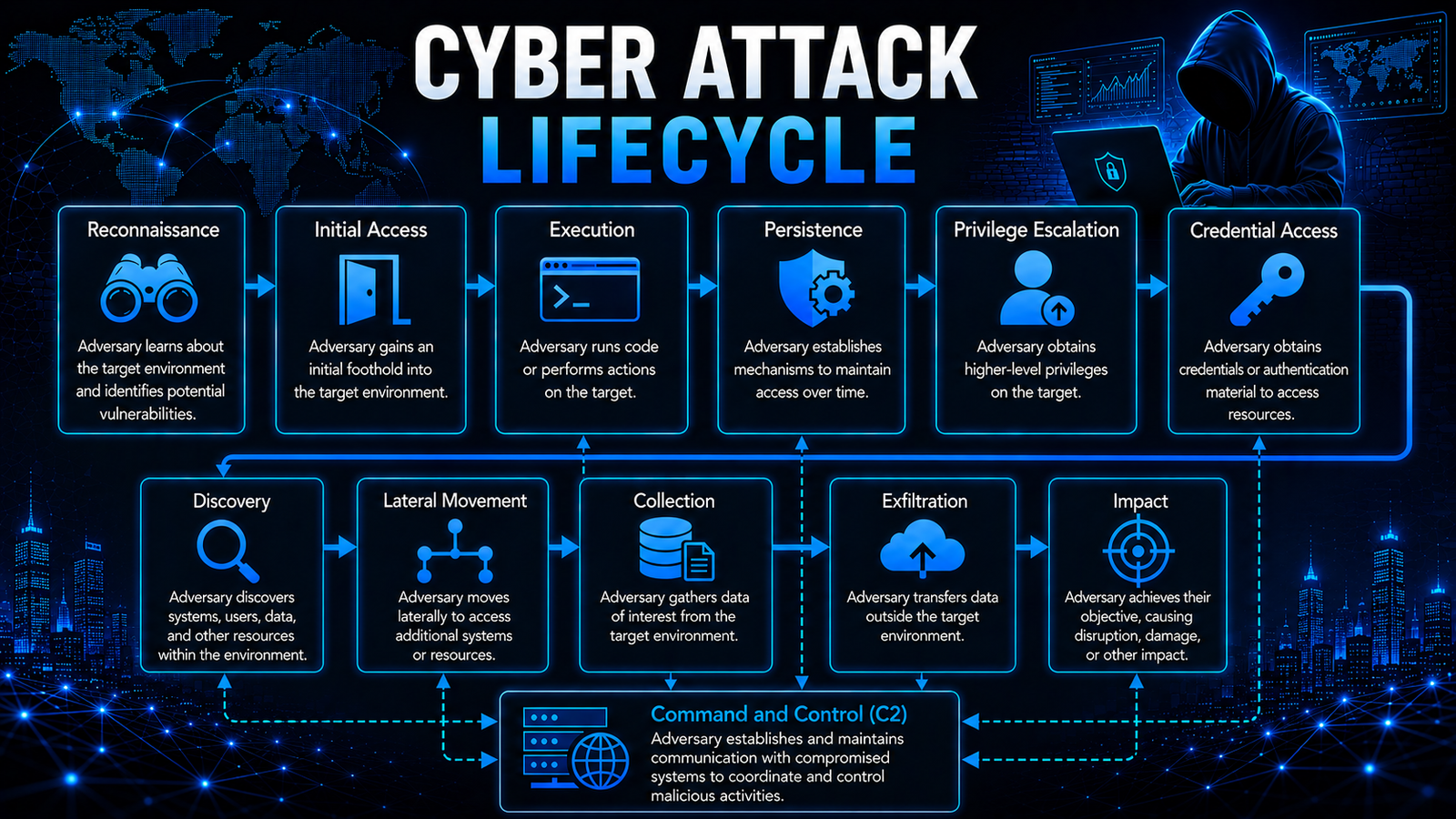
Cyber Attack Lifecycle
The Cyber Attack Lifecycle describes how adversaries may progress from reconnaissance and initial access through execution, persistence, privilege escalation, credential access, discovery, lateral movement, collection, exfiltration, and impact, with Command and Control supporting multiple activities throughout an attack.
-
Understanding Adversary
An adversary is an individual, group, organization, or other entity that may act against a target’s security interests. Understanding an adversary involves examining its identity, motivation, intent, capabilities, resources, targets, and behavior. This provides a foundation for understanding cybersecurity threats, attacks, risk, threat modeling, and defensive security.
-
Understand Audit And Compliance
Introduction Audit and compliance are fundamental disciplines that promote accountability, transparency, integrity, and continual improvement. They provide structured mechanisms for evaluating activities, verifying conformity with established requirements, assessing the effectiveness of controls, and providing confidence that responsibilities are performed consistently and objectively. The principles of audit and compliance are universal and apply across commercial enterprises,…
-
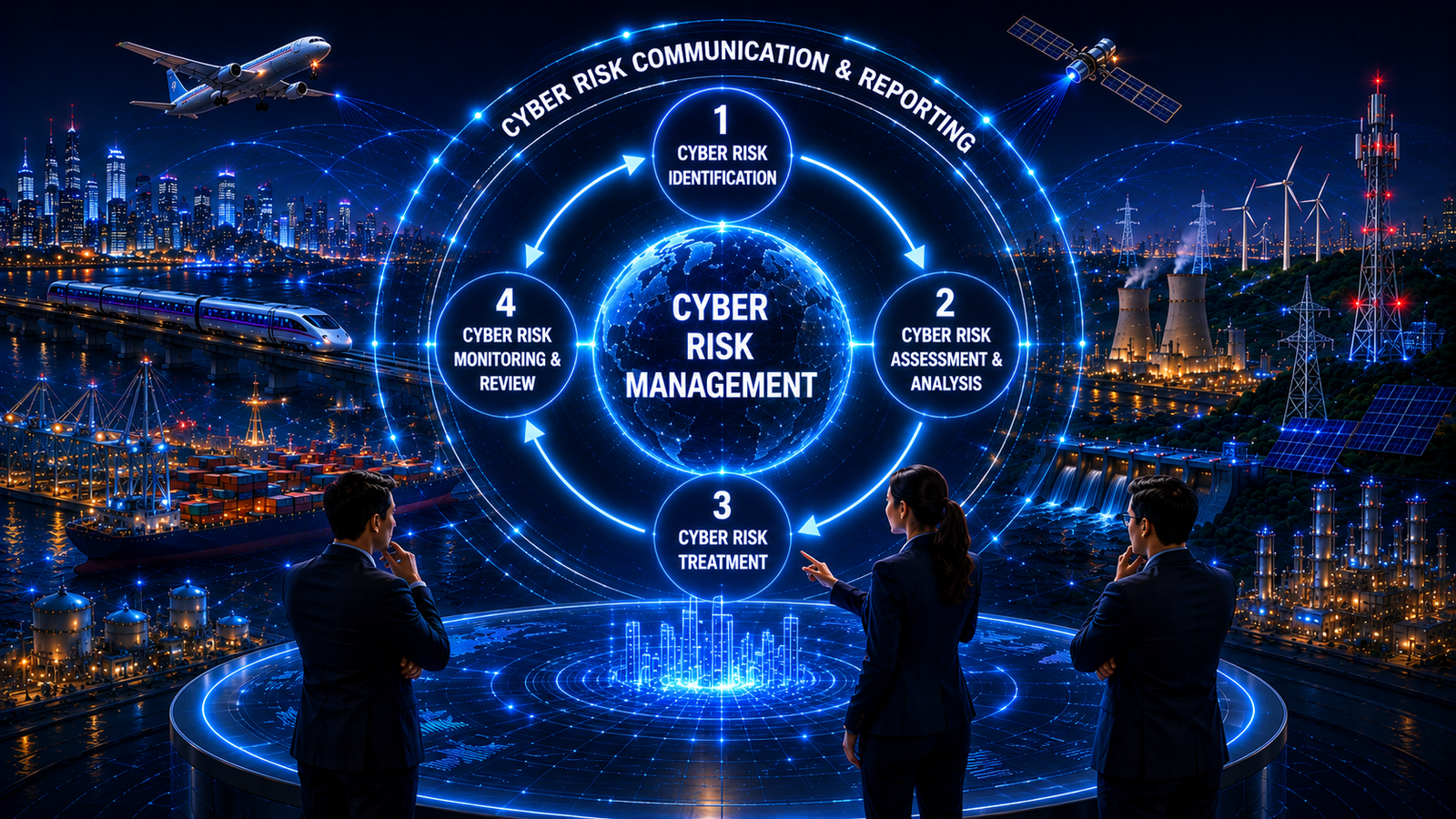
Understanding Cyber Risk Management
Cyber risk management is a structured process for identifying, assessing, analyzing, treating, monitoring, and communicating risks arising from digital systems, information, technologies, and connected environments. It provides a systematic approach to understanding cyber risk, selecting appropriate treatments, managing residual risk, and maintaining risk visibility throughout the cybersecurity lifecycle.
-
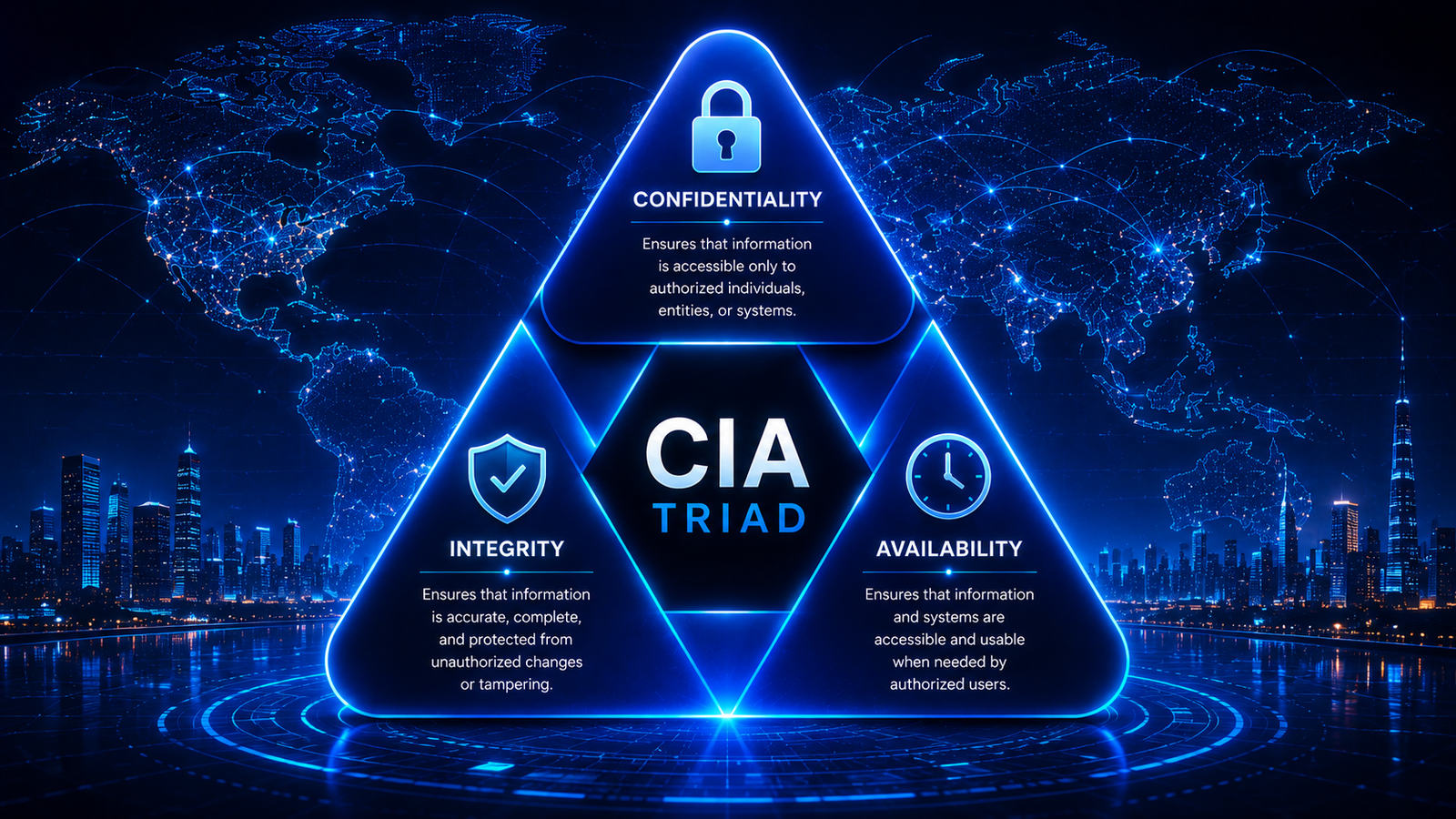
Understanding The CIA Triad
The CIA Triad is a foundational cybersecurity model that defines three essential objectives for protecting information and systems: Confidentiality, Integrity, and Availability. These principles provide a basis for evaluating security requirements, understanding threats, designing security controls, and establishing how cybersecurity domains and controls collectively protect information and support secure operations.
-
Understanding Security Governance
Security governance establishes the direction, accountability, oversight, and decision-making framework required to govern cybersecurity. It aligns security principles, risks, controls, policies, architecture, technologies, and cybersecurity domains with organizational objectives while providing the foundation for effective security management, compliance, resilience, and continuous improvement.
-
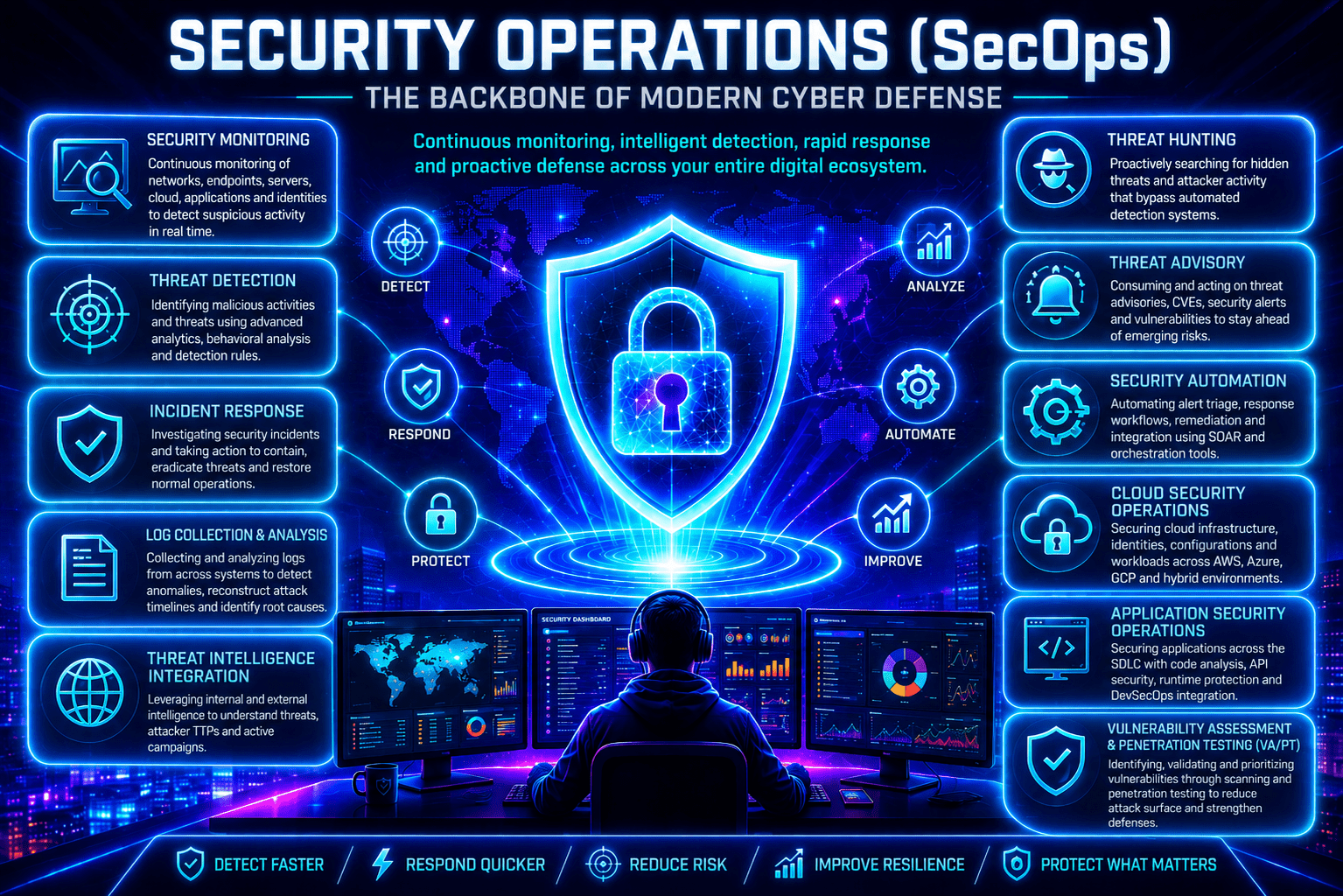
Security Operations (SecOps): The Backbone of Modern Cyber Defense
In today’s digital landscape, cyber attacks are continuous, automated, and increasingly sophisticated. Organizations can no longer rely on periodic security checks or isolated tools. They need a continuous, structured, and operational approach to cybersecurity. This is known as Security Operations (SecOps). Security Operations forms the foundation of how organizations detect, investigate, and respond to cyber…
-
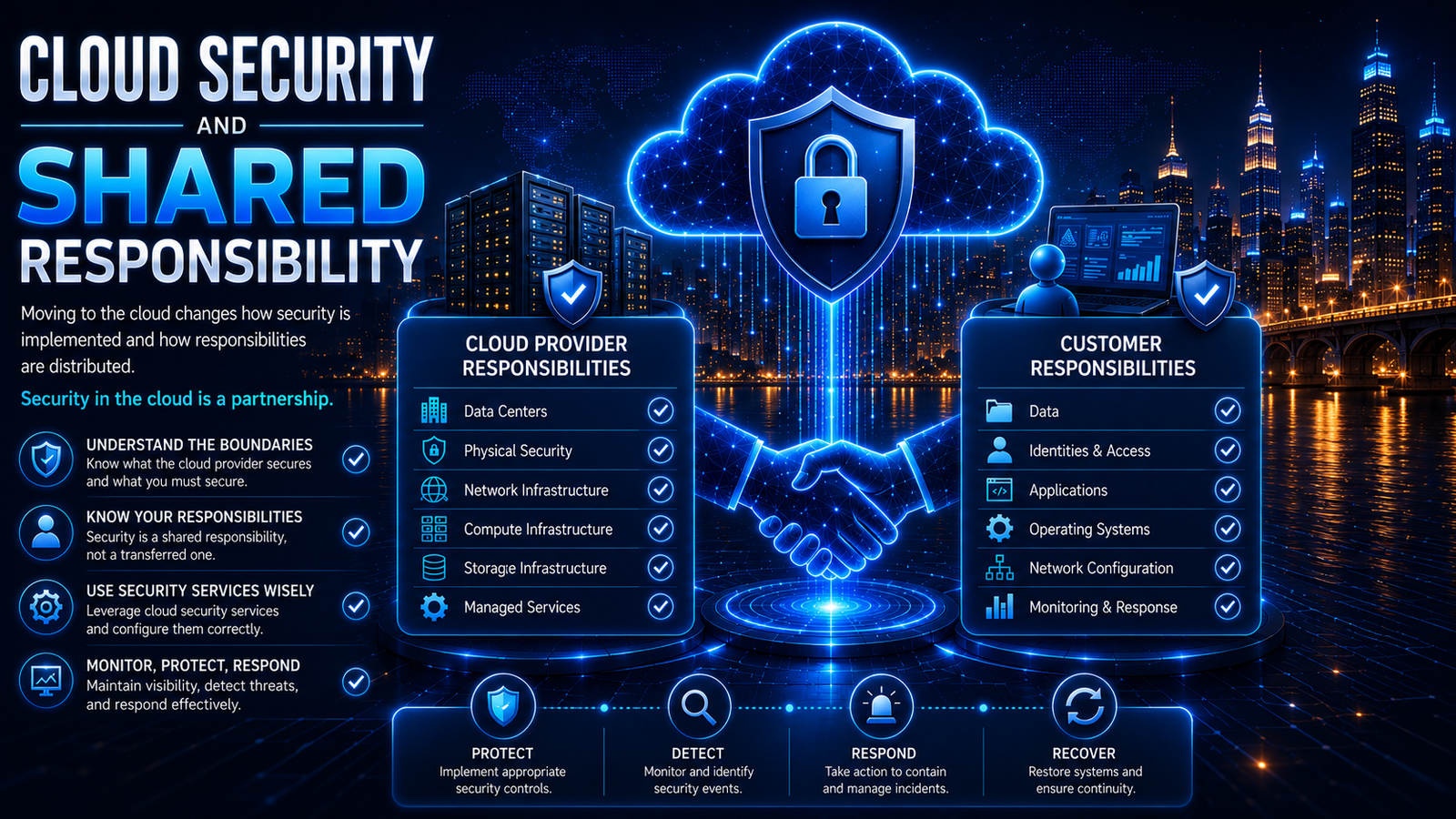
Cloud Security and Shared Responsibility
Cloud security is essential for protecting cloud-based applications, data, identities, infrastructure, and services. The Shared Responsibility Model explains how security responsibilities are distributed between cloud service providers and users, making clear that moving to the cloud changes security responsibilities rather than removing them.
-
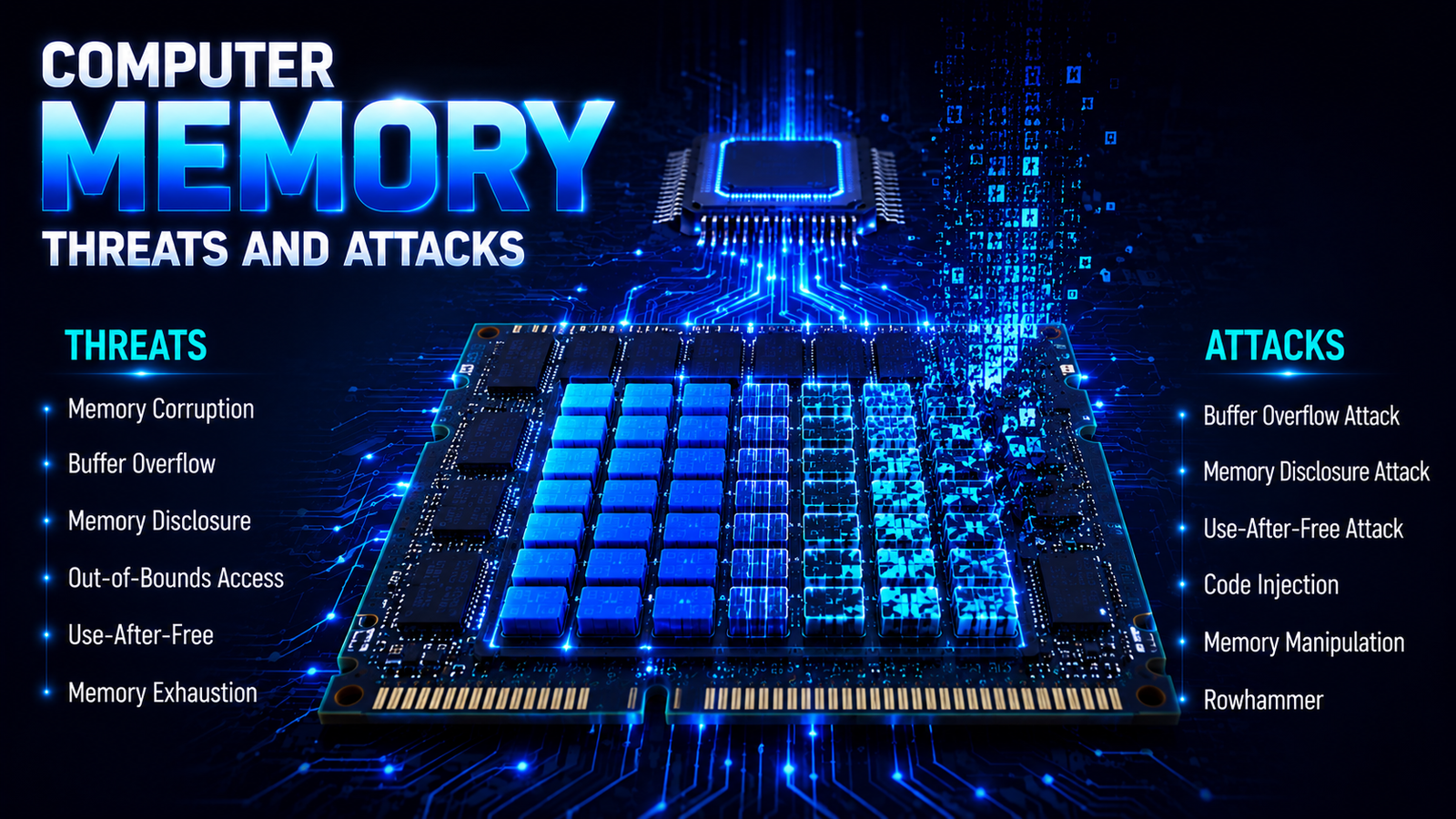
Computer Memory Threats and Attacks
Computer memory threats and attacks can expose sensitive data, corrupt application memory, disrupt system availability, or influence program execution. Common concerns include memory corruption, buffer overflows, memory disclosure, out-of-bounds access, use-after-free, and memory exhaustion. Understanding these risks helps explain how memory compromise can affect confidentiality, integrity, availability, applications, and computing systems.