Security Operations (SecOps): The Backbone of Modern Cyber Defense
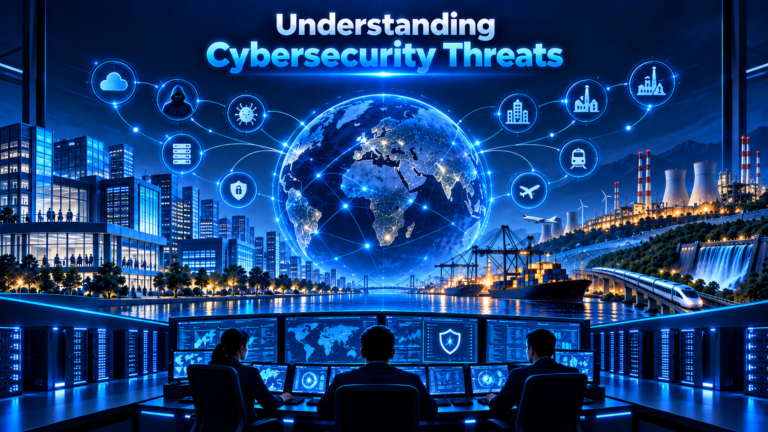
In today’s digital landscape, cyber attacks are continuous, automated, and increasingly sophisticated. Organizations can no longer rely on periodic security checks or isolated tools. They need a continuous, structured, and operational approach to cybersecurity.
This is known as Security Operations (SecOps).
Security Operations forms the foundation of how organizations detect, investigate, and respond to cyber attacks across their entire digital environment.
What is Security Operations?
Security Operations (SecOps) is the continuous practice of protecting an organization’s systems, data, and users by monitoring, detecting, investigating, and responding to cybersecurity attacks.
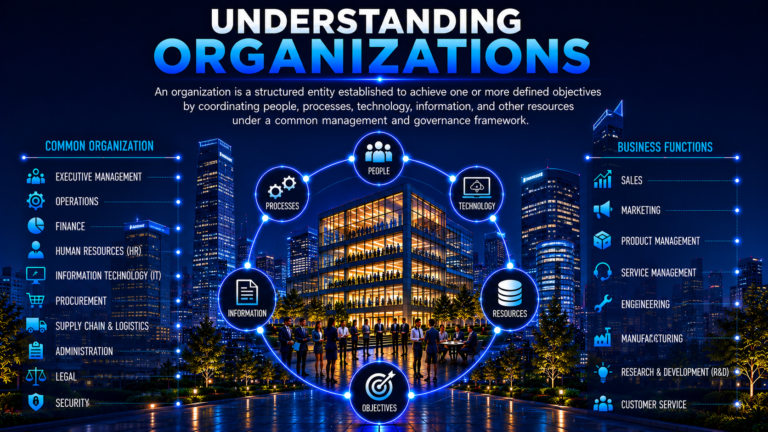
It is not a single team or tool. It is a cybersecurity operating model that combines people, processes, and technology to ensure continuous defense against attacks.
Security Operations ensures that security is not reactive or periodic, but always active and continuously improving.
Core Objective of Security Operations
The primary objective of Security Operations is:
- Improving response efficiency and speed of containment
- Increasing visibility across IT environments
- Maintaining overall security posture
- Assessing attack surface across systems and environments
- Uncovering vulnerabilities and security weaknesses before exploitation
- Detecting and preventing security attacks and threats
- Early identification of suspicious and malicious activity
- Rapid containment and mitigation of security incidents
- Supporting proactive risk reduction and exposure management
Functions of Security Operations
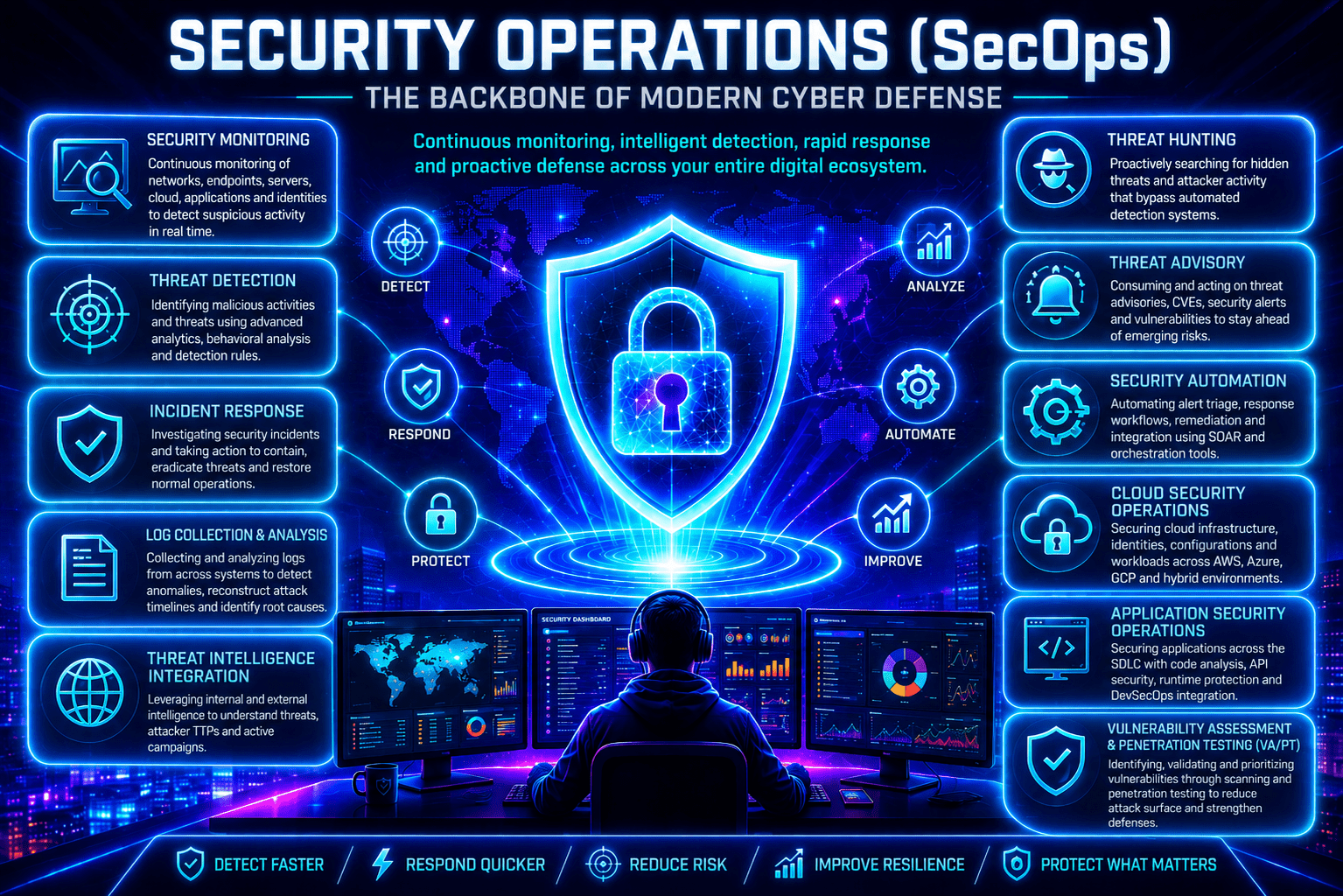
Security Operations is built from multiple interconnected functions that work together to provide continuous detection, response, and protection across the enterprise.
Security Monitoring
Security Monitoring is the continuous observation of an organization’s digital environment, including networks, endpoints, servers, cloud workloads, applications, and identity systems.
The goal is to identify suspicious, anomalous, or malicious activity as early as possible before it becomes a security incident.
In most organizations, this function is operationally handled by the Security Operations Center (SOC), which continuously monitors and analyzes security events.
Incident Response
Incident Response is the structured process of handling confirmed security incidents.
It involves containment, eradication, recovery, and investigation to minimize damage and restore normal operations. It also ensures root cause analysis is performed to prevent recurrence.
Threat Intelligence Integration
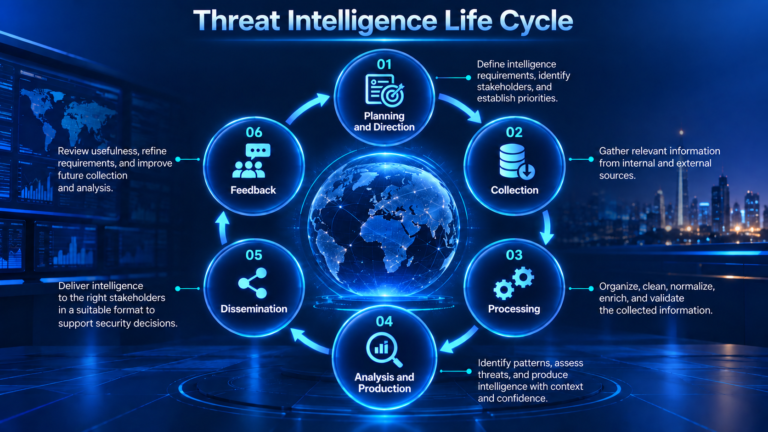
Threat Intelligence Integration involves using internal and external intelligence sources to understand attacker behavior, vulnerabilities, and ongoing threat campaigns.
This helps organizations anticipate attacks and strengthen defenses proactively.
Threat Hunting
Threat Hunting is a proactive activity where security analysts actively search for hidden threats that may have bypassed existing security controls.
It focuses on identifying advanced persistent threats, stealthy attacker behavior, and unknown compromises.
Threat Advisory
Threat Advisory involves consuming and acting on security alerts and advisories from trusted sources.
These include newly discovered vulnerabilities, active exploitation reports, and critical security updates that require immediate attention.
Security Automation
Security Automation improves the speed, consistency, and scalability of Security Operations.
It automates repetitive tasks such as alert triage, incident classification, enrichment, and response actions, reducing manual workload and human error.
Cloud Security Operations
Cloud Security Operations focuses on securing cloud infrastructure and workloads across platforms such as AWS, Azure, and GCP.
It ensures continuous monitoring of cloud configurations, identity access, network activity, and workload behavior to detect misconfigurations and threats.
Application Security Operations
Application Security Operations focuses on securing applications throughout their lifecycle—from design to deployment.
It includes identifying vulnerabilities in code, securing APIs, and integrating threat modeling during the design phase.
It ensures security is embedded into development and deployment processes.
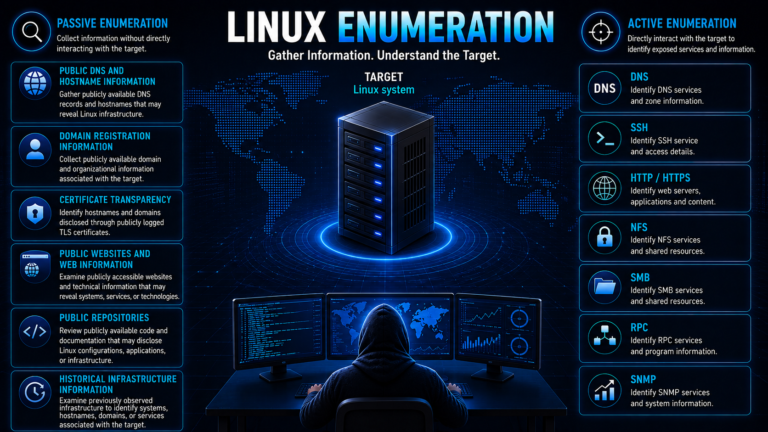
Vulnerability Assessment & Penetration Testing (VA/PT)
Vulnerability Assessment identifies known security weaknesses in systems and applications through scanning.
Penetration Testing simulates real-world attacks to evaluate how those vulnerabilities can be exploited.
Together, they help organizations prioritize remediation based on actual risk.
Why Security Operations is Critical
Without Security Operations:
- Attacks remain undetected for longer periods
- Incident response is slower and uncoordinated
- Visibility across systems is limited
- Business impact is significantly higher
With Security Operations:
- Threats are detected faster
- Response is structured and coordinated
- Security posture continuously improves
- Risk is actively monitored and reduced
How AI is Transforming Security Operations (SecOps)
Modern Security Operations is rapidly evolving with Artificial Intelligence (AI) and Machine Learning (ML), making detection and response faster, smarter, and more scalable.
AI is not replacing SecOps—it is enhancing it.
AI-Driven Security Operations
AI helps security teams manage large volumes of alerts by:
- Prioritizing alerts based on risk and context
- Reducing alert fatigue through correlation
- Grouping related events into meaningful incidents
- Assisting analysts with investigation summaries
AI-Based Threat Detection and Threat Hunting
AI improves detection and hunting by identifying patterns and anomalies that traditional systems miss.
It enables detection of unknown threats, lateral movement, and abnormal behavior across users and systems.
AI-Driven Vulnerability Assessment
AI enhances vulnerability management by:
- Prioritizing vulnerabilities based on exploitability
- Correlating with active threat intelligence
- Reducing false positives
- Suggesting context-aware remediation
AI-Based Security Automation
AI strengthens automation by enabling dynamic response workflows.
It helps classify incidents, trigger containment actions, and continuously improve response decisions based on past incidents.
AI in Cloud and Application Security Operations
AI enhances cloud and application security by:
- Detecting misconfigurations in cloud environments
- Identifying abnormal API behavior
- Detecting application vulnerabilities in runtime and development
- Strengthening behavioral monitoring in cloud-native systems
Conclusion
Security Operations is the foundation of modern cybersecurity. It unifies monitoring, detection, response, cloud security, application security, vulnerability management, intelligence, and automation into a continuous operational model.
With AI integration, SecOps is evolving into a more proactive, intelligent, and adaptive security discipline capable of defending against modern cyber threats.