Understanding Business
Introduction
Businesses are the foundation of every economy. They produce goods, deliver services, create employment, generate revenue, and drive innovation across every sector. Whether it is a small local retailer, a multinational technology company, a manufacturing enterprise, or a financial institution, every business contributes to economic growth and societal development.
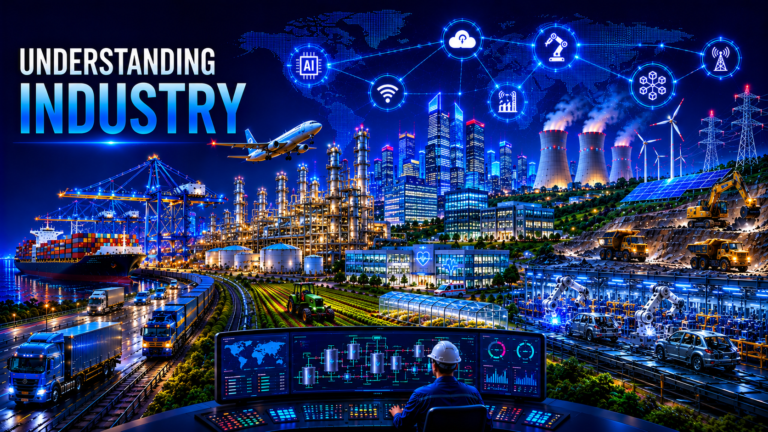
Businesses rarely operate in isolation. Organizations performing similar economic activities are grouped into industries, such as healthcare, banking, manufacturing, telecommunications, retail, and information technology. Together, these industries form the broader economy by producing goods, delivering services, facilitating trade, and supporting the movement of capital, resources, and labor.
Understanding the relationship between businesses, industries, and the economy provides valuable insight into how organizations operate and interact within the global marketplace. It explains how individual businesses contribute to industry growth, how industries collectively influence economic development, and how economic conditions, government policies, and technological advancements shape business operations.
In today’s digital economy, businesses increasingly rely on technologies such as cloud computing, artificial intelligence (AI), data analytics, automation, and cybersecurity to improve operational efficiency, enhance customer experiences, support innovation, and maintain competitiveness. Digital technologies have become essential enablers of modern business, transforming how organizations create value, collaborate with stakeholders, and deliver products and services.
What is a Business?
A business is an organization or entity that engages in economic activities by producing goods, delivering services, or both, to meet the needs and demands of customers. Businesses create value by transforming resources into products or services that customers are willing to purchase. In return, they generate revenue to sustain operations, achieve organizational objectives, and support long-term growth.
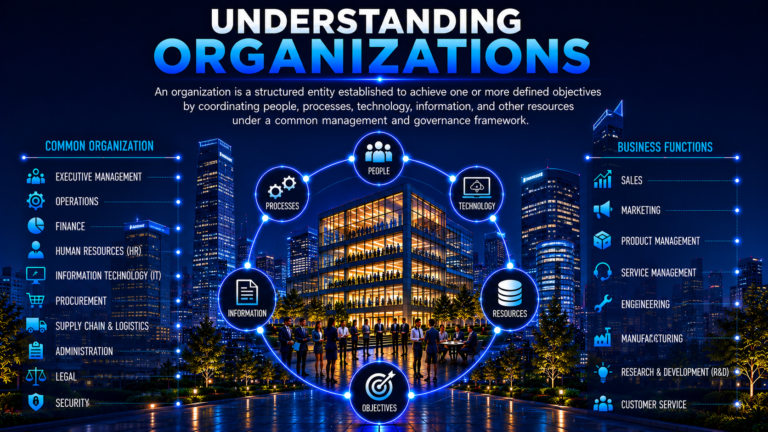
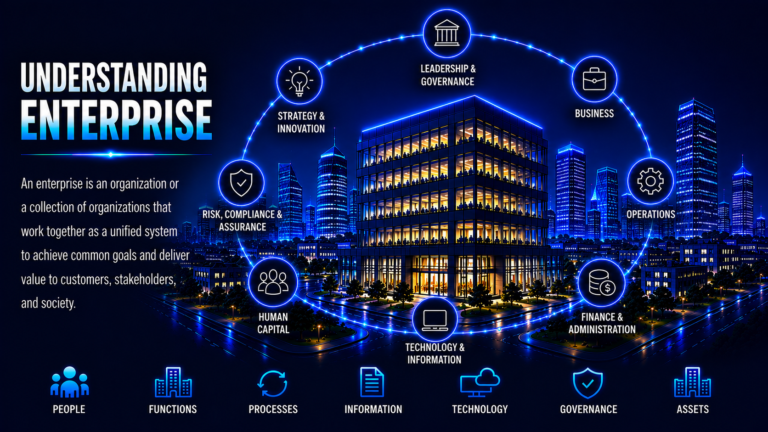
Businesses exist in many forms and sizes, ranging from sole proprietorships and partnerships to corporations and multinational enterprises. They operate across virtually every industry, including manufacturing, healthcare, banking, retail, transportation, education, energy, telecommunications, hospitality, and information technology. Regardless of their size or industry, every business depends on people, processes, technology, and resources to operate efficiently and deliver value.
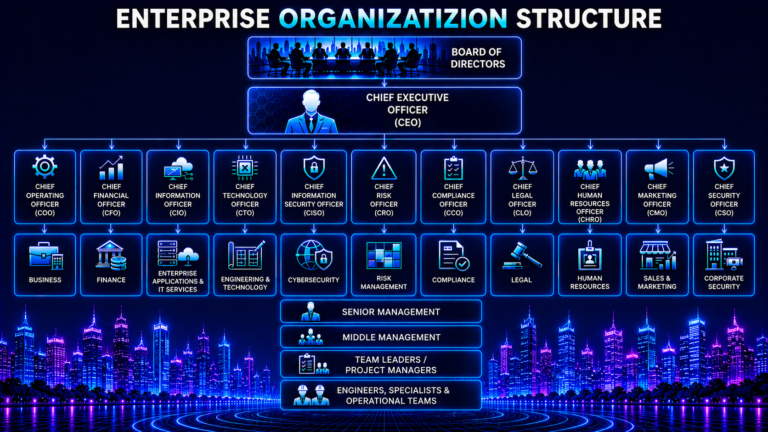
Every business performs a variety of functions, including management, finance, operations, procurement, sales, marketing, human resources, customer service, legal and compliance, and information technology. These functions work together to ensure that the organization operates effectively, meets customer expectations, complies with regulations, and remains competitive in the marketplace.
Businesses are the fundamental building blocks of industries. Organizations engaged in similar economic activities are grouped into industries, and the collective activities of these industries contribute to the overall economy. Understanding what a business is provides the foundation for understanding how businesses interact within industries and how their combined efforts drive economic growth.
Revenue, Cost, and Profit
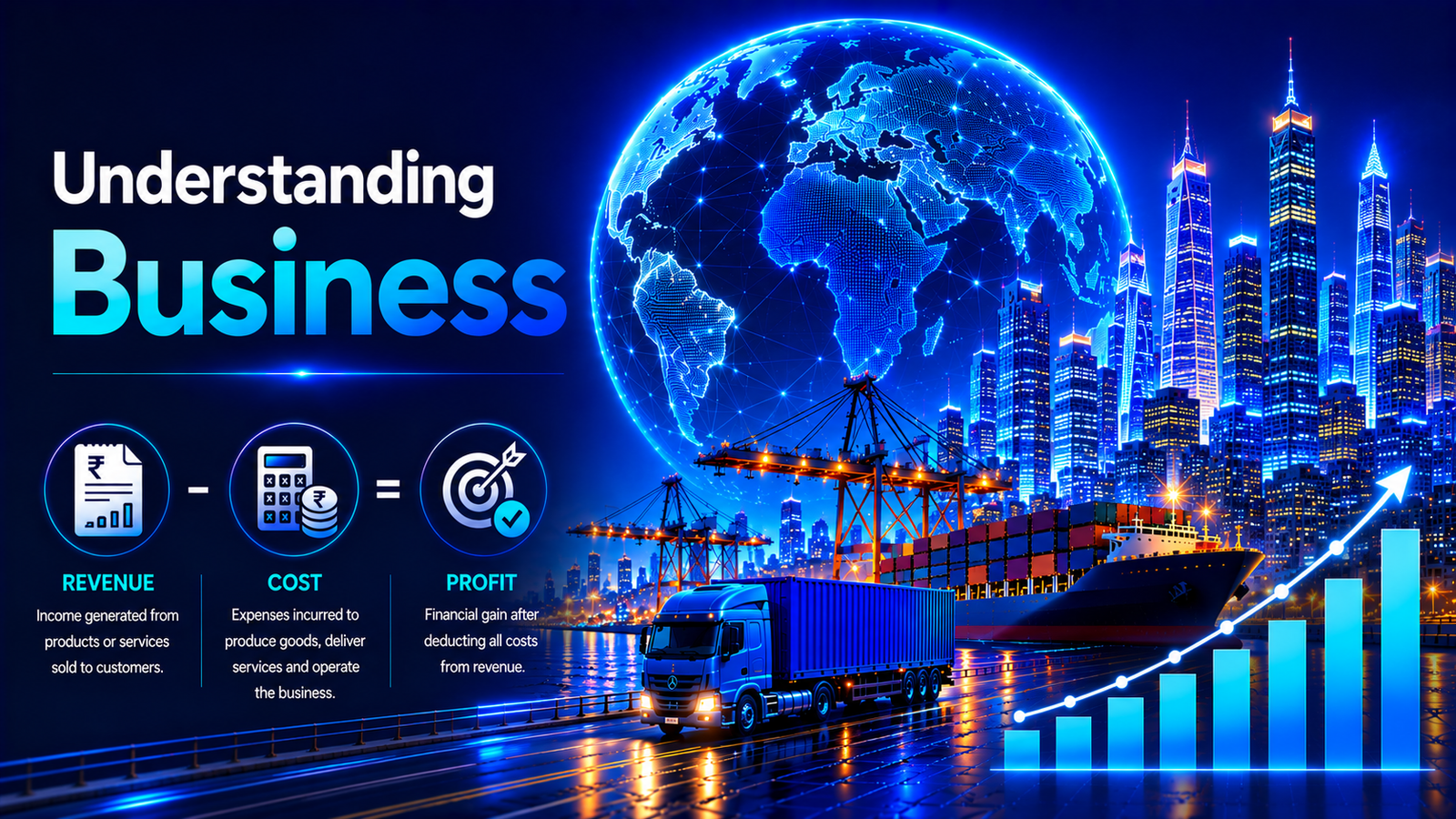
Revenue, cost, and profit are three fundamental financial concepts that determine the financial performance and sustainability of a business. Every business generates revenue by selling products, providing services, or both. To earn this revenue, businesses incur various costs associated with producing goods, delivering services, and managing day-to-day operations. The difference between revenue and total costs determines whether a business earns a profit or incurs a loss.
Revenue
Revenue is the total income a business earns from its primary business activities, such as selling products or providing services, before deducting any expenses. It represents the money generated through normal business operations and serves as the primary source of income that enables a business to cover operating expenses, invest in growth, and achieve its strategic objectives.
Businesses can generate revenue from various sources depending on their nature and business model. Common sources of revenue include product sales, service fees, subscriptions, licensing, consulting, commissions, advertising, and other business activities. Sustained revenue growth is often an indicator of increasing customer demand, market expansion, improved business performance, and long-term business success.
Cost
Cost refers to the expenses a business incurs to produce goods, deliver services, and support its day-to-day operations. These expenses may include raw materials, employee salaries, rent, utilities, equipment, technology, marketing, transportation, maintenance, taxes, and administrative expenses.
Business costs are generally classified into two categories:
- Fixed Costs – Expenses that remain relatively constant regardless of production or sales volume, such as rent, insurance, and employee salaries.
- Variable Costs – Expenses that fluctuate based on production levels or business activity, such as raw materials, packaging, shipping, sales commissions, and utility consumption.
Effective cost management enables businesses to improve operational efficiency, optimize resource utilization, maintain profitability, and achieve long-term financial stability.
Profit
Profit is the financial gain a business earns after deducting all costs and expenses from its revenue. It is one of the most important indicators of a business’s financial performance and operational efficiency.
The basic formula for calculating profit is:
Profit = Revenue − Total Cost
The financial outcome depends on the relationship between revenue and total cost:
- Revenue > Total Cost → Profit
- Revenue = Total Cost → Break-even (No Profit, No Loss)
- Revenue < Total Cost → Loss
A profitable business has the financial resources to expand its operations, invest in innovation and technology, develop new products and services, improve infrastructure, hire skilled employees, and support long-term growth. By effectively managing revenue and costs, businesses can strengthen their competitive position, create value for stakeholders, contribute to the growth of their industry, and support overall economic development.
Relationship Between Business, Industry, and Economy
Business, industry, and the economy are closely interconnected and represent different levels of economic activity. A business is an individual organization that produces goods or delivers services. Multiple businesses engaged in similar economic activities are collectively classified as an industry. In turn, all industries together form the economy of a country or region.
This relationship can be viewed as a hierarchy in which businesses serve as the foundation. Every industry is composed of numerous businesses competing and collaborating within the same market, while the economy encompasses all industries along with consumers, governments, financial institutions, and markets that facilitate economic activity.
As businesses grow, innovate, create employment, invest in technology, and generate revenue, they strengthen their respective industries. Strong industries contribute to increased production, trade, investment, and innovation, which collectively drive economic growth, improve living standards, and enhance national competitiveness.
In today’s interconnected world, the success of the economy depends on the health and performance of its businesses and industries. Changes affecting individual businesses can influence entire industries, while economic conditions such as inflation, interest rates, government policies, and technological advancements can directly impact business operations. This continuous interaction demonstrates that businesses, industries, and the economy are not independent entities but interconnected components of a single economic ecosystem.
How Businesses Contribute to Industries
Businesses are the primary drivers of every industry. Each organization contributes through its products, services, investments, innovation, and workforce, collectively shaping the performance and growth of its respective industry. As businesses compete and collaborate, they improve product quality, increase operational efficiency, adopt new technologies, and respond to changing customer demands. These activities promote innovation, strengthen supply chains, and enhance the overall competitiveness of the industry.
Businesses also create employment opportunities, invest in research and development, establish partnerships, and contribute to industry standards and best practices. Their continuous efforts enable industries to expand, adapt to market changes, and remain resilient in an increasingly competitive global marketplace.
How Industries Contribute to the Economy
Industries collectively form the foundation of a nation’s economy. Each industry contributes by producing goods, delivering services, generating employment, attracting investments, supporting exports, and creating economic value. The combined output of industries contributes significantly to a country’s Gross Domestic Product (GDP), tax revenues, foreign exchange earnings, and overall economic development.
A diversified economy with strong industries is generally more resilient to economic fluctuations. Growth in sectors such as manufacturing, healthcare, agriculture, finance, energy, information technology, and telecommunications stimulates innovation, improves productivity, supports infrastructure development, and enhances national competitiveness. As industries expand, they create new business opportunities, strengthen domestic markets, and contribute to long-term economic stability.
Flow of Goods, Services, Money, and Employment
Businesses, industries, and the economy are connected through the continuous flow of goods, services, money, and employment. Businesses procure raw materials, manufacture products, or deliver services to customers. Consumers and organizations purchase these products and services, generating revenue that enables businesses to pay employees, invest in technology, purchase resources, and expand their operations.
This ongoing cycle creates employment, supports suppliers, generates tax revenue for governments, encourages investments, and stimulates economic activity. Financial institutions facilitate this process by providing capital and financial services, while governments support economic growth through policies, regulations, and public infrastructure.
The continuous movement of goods, services, money, and labor creates an interconnected economic ecosystem where the success of individual businesses contributes to the growth of industries, and the collective success of industries strengthens the overall economy. This relationship enables sustainable development, improves living standards, and supports long-term economic prosperity.
Government and Business Environment
Governments play a vital role in creating a stable, secure, and competitive environment in which businesses can operate and grow. Through laws, regulations, economic policies, and public investments, governments establish the framework that supports business activities while promoting fair competition, consumer protection, and sustainable economic development.
Businesses operate within a regulatory environment that includes taxation, company registration, licensing, labor laws, environmental regulations, intellectual property protection, trade policies, and industry-specific compliance requirements. These regulations help ensure that businesses operate legally, ethically, and responsibly while protecting the interests of customers, employees, investors, and society.
Governments also support business growth by investing in infrastructure such as transportation, telecommunications, energy, education, healthcare, and digital connectivity. They encourage innovation and entrepreneurship through financial incentives, grants, research initiatives, startup programs, and policies that attract domestic and foreign investment. These initiatives help businesses expand, improve productivity, and compete in both domestic and international markets.
A stable and well-regulated business environment enables organizations to plan for the future, manage risks, build investor confidence, and achieve sustainable growth. By balancing economic development with appropriate governance and regulation, governments create conditions that allow businesses and industries to thrive while contributing to the overall prosperity of society.
Role of Digital Technology in Business
Digital technology has become a fundamental enabler of modern business operations. Organizations increasingly rely on digital solutions to improve productivity, streamline business processes, enhance customer experiences, and make informed decisions. Technologies such as cloud computing, artificial intelligence (AI), data analytics, automation, the Internet of Things (IoT), mobile technologies, and digital communication platforms have transformed how businesses operate and compete.
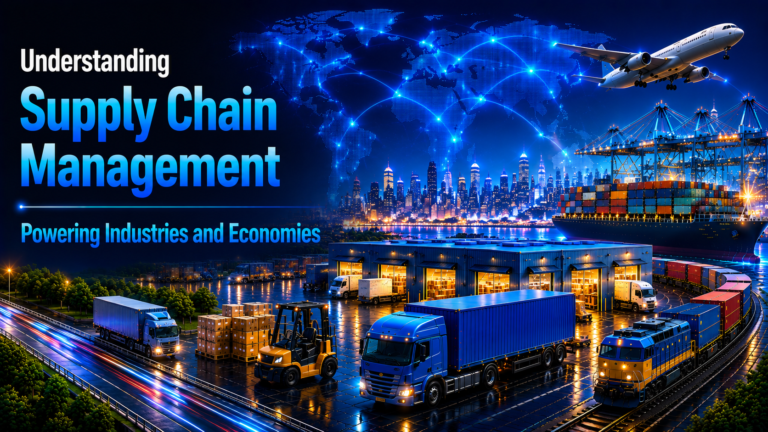
Digital technologies enable businesses to automate repetitive tasks, improve collaboration, optimize supply chains, analyze large volumes of data, and deliver products and services more efficiently. They also support innovation by enabling new business models, digital products, online services, and global market access, allowing organizations to remain competitive in an increasingly digital economy.
As businesses continue their digital transformation journey, technology has become an essential business asset rather than simply an operational tool. Organizations must ensure that their digital systems are reliable, scalable, and secure to support continuous operations and sustainable growth. This increasing dependence on digital technology has also elevated the importance of cybersecurity, data protection, privacy, and regulatory compliance as integral components of modern business operations.
Digital technology continues to reshape businesses by driving innovation, improving efficiency, enabling collaboration, and creating new opportunities for growth. Organizations that successfully embrace digital transformation are better positioned to adapt to changing market conditions, respond to customer expectations, and achieve long-term business success.
Conclusion
Businesses are the fundamental building blocks of industries, and industries collectively form the economy. Together, they create an interconnected ecosystem that drives production, innovation, employment, trade, and economic development. The success of individual businesses strengthens industries, while thriving industries contribute to national and global economic growth.
Government policies, a supportive business environment, and technological advancements significantly influence how businesses operate and compete. In today’s digital era, organizations increasingly rely on digital technologies to improve efficiency, enhance customer experiences, accelerate innovation, and support sustainable growth. Understanding the relationship between business, industry, and the economy provides valuable insight into how organizations create value, contribute to economic prosperity, and adapt to an increasingly connected and technology-driven world.