Understanding Cybersecurity
Introduction
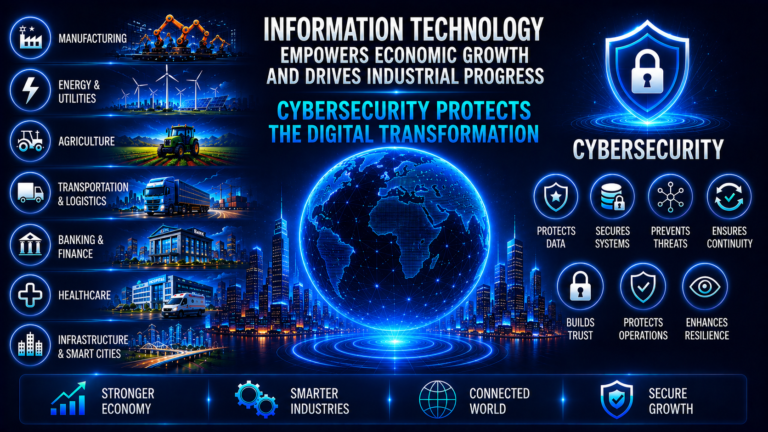
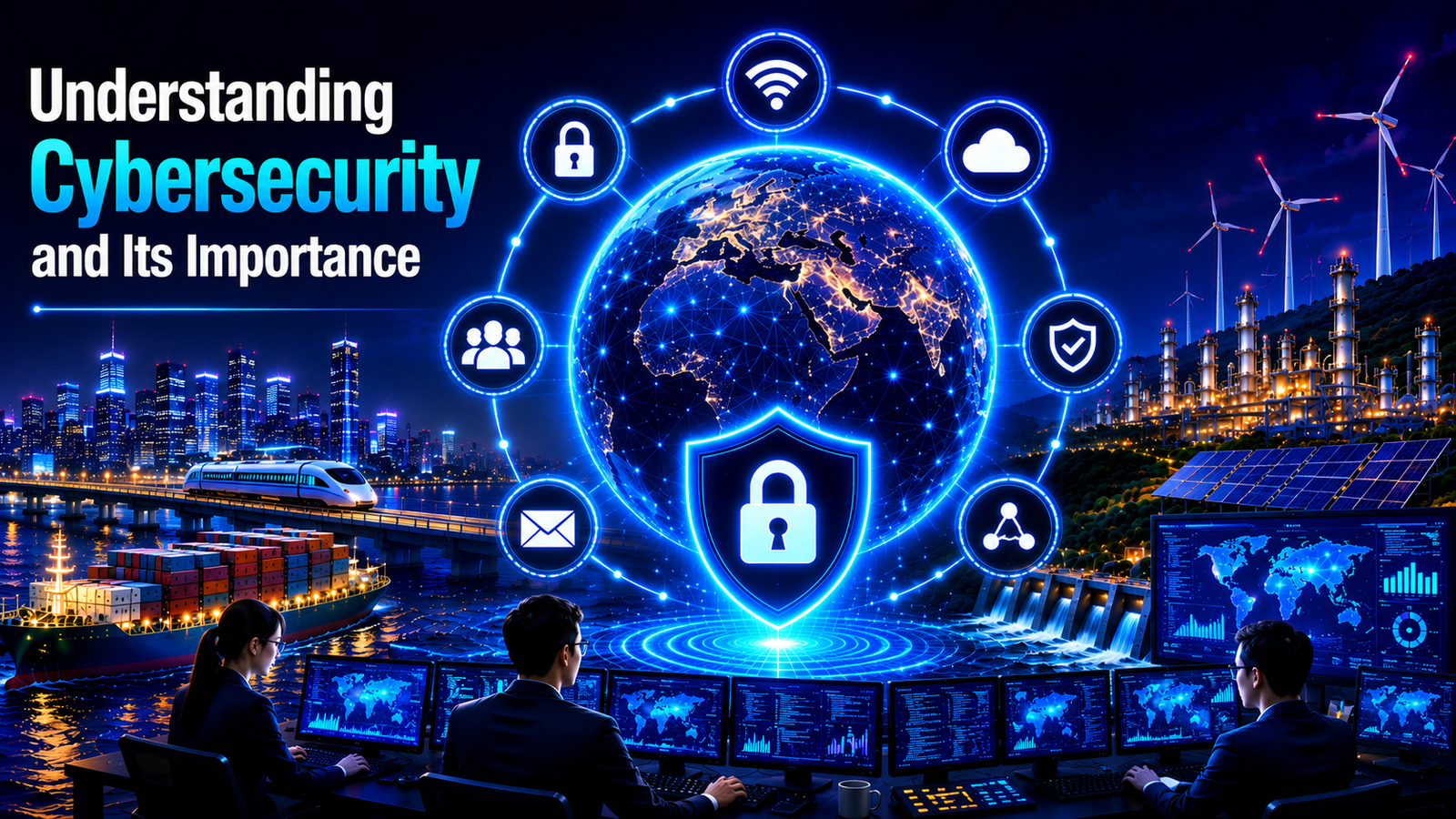
Cybersecurity has become one of the most important disciplines of the digital age. As individuals, businesses, governments, and critical infrastructure increasingly depend on digital technologies, protecting digital assets has become essential for maintaining security, privacy, trust, and operational resilience.
The rapid advancement of computing, networking, the Internet, cloud computing, mobile technologies, the Internet of Things (IoT), and Artificial Intelligence (AI) has transformed the way people communicate, conduct business, deliver services, and access information. Organizations now rely on interconnected digital ecosystems to support virtually every aspect of their operations, from customer engagement and financial transactions to healthcare, education, manufacturing, and public services.
While these technological advancements have created unprecedented opportunities for innovation, productivity, and economic growth, they have also introduced new security challenges. Cyber threats continue to evolve in sophistication, targeting individuals, organizations, governments, and critical infrastructure. Cyberattacks can disrupt operations, compromise sensitive information, damage reputations, cause financial losses, and threaten public safety.
Cybersecurity provides the foundation for protecting today’s digital environment against these evolving threats. It enables organizations to manage cyber risks, safeguard valuable information, maintain operational continuity, comply with legal and regulatory requirements, and preserve the trust of customers, partners, and stakeholders.
Understanding Cybersecurity
Cybersecurity is the practice of protecting digital systems, networks, applications, devices, cloud environments, infrastructure, and information from cyber threats, unauthorized access, misuse, disruption, alteration, or destruction. It encompasses the people, processes, technologies, and governance practices required to secure digital assets throughout their lifecycle.
Modern cybersecurity extends beyond protecting computers and networks. It is a multidisciplinary field that combines governance, risk management, security architecture, identity and access security, information and data security, network security, cloud security, software security, security operations, business continuity, compliance, and many other specialized disciplines. Together, these disciplines provide a comprehensive approach to protecting the digital ecosystem.
The primary objectives of cybersecurity are to:
- Protect the confidentiality of sensitive information.
- Preserve the integrity and accuracy of data.
- Ensure the availability of systems, applications, and services.
- Reduce cyber risks and minimize operational disruption.
- Support business continuity and organizational resilience.
- Meet legal, regulatory, and contractual obligations.
- Enable secure digital transformation and innovation.
- Build trust among customers, partners, employees, and stakeholders.
Cybersecurity is not solely the responsibility of security teams or technology professionals. Executive leadership, business units, employees, technology providers, governments, standards organizations, and individuals all contribute to maintaining a secure digital environment. Effective cybersecurity requires continuous collaboration, proactive risk management, security awareness, and the implementation of appropriate safeguards across people, processes, and technology.
As technology and cyber threats continue to evolve, cybersecurity remains an ongoing process of identifying risks, protecting digital assets, detecting threats, responding to incidents, recovering from disruptions, and continuously improving security capabilities.
The CIA Triad
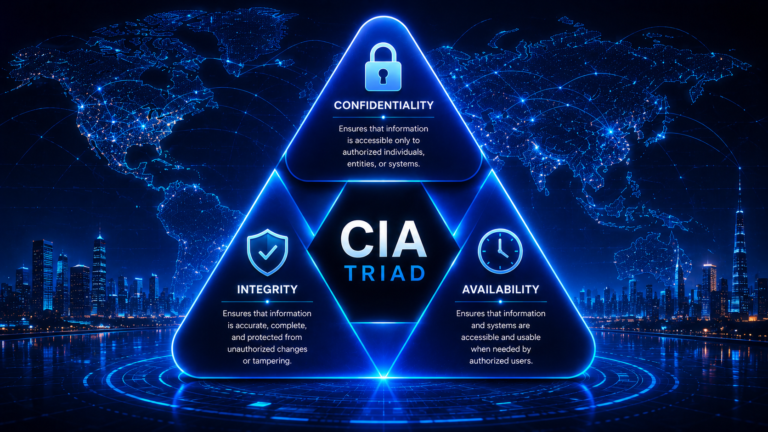
The CIA Triad is the foundational model of cybersecurity and represents the three primary objectives of protecting information and digital systems. These three principles provide the foundation for designing cybersecurity strategies, implementing security controls, selecting security technologies, and managing cyber risks across an organization.
Whether protecting personal information, securing enterprise systems, or defending critical infrastructure, cybersecurity ultimately seeks to preserve one or more elements of the CIA Triad. Understanding these principles is essential because they influence nearly every aspect of cybersecurity, from governance and risk management to security architecture and daily operations.
Confidentiality
Confidentiality ensures that information is accessible only to authorized users, systems, or processes. Its primary objective is to prevent the unauthorized disclosure of sensitive information, whether caused by cyberattacks, insider threats, accidental exposure, or human error.
Organizations protect confidentiality by implementing controls that restrict access based on business requirements and user responsibilities. Common measures include authentication, authorization, Identity and Access Management (IAM), Multi-Factor Authentication (MFA), encryption, data classification, role-based access control (RBAC), and the principle of least privilege.
Examples
Examples of information that requires confidentiality include:
- Personal information
- Customer information
- Financial records
- Healthcare records
- Intellectual property
- Business strategies
- Government classified information
Maintaining confidentiality protects individual privacy, preserves competitive advantage, supports regulatory compliance, and reduces the risk of data breaches.
Integrity
Integrity ensures that information remains accurate, complete, consistent, and trustworthy throughout its lifecycle. Information should not be modified, deleted, or corrupted without proper authorization, ensuring that users and organizations can rely on its accuracy for operational and business purposes.
Organizations maintain integrity through mechanisms such as hashing, digital signatures, secure software development practices, database integrity controls, change management, audit logging, version control, and access controls that prevent unauthorized modifications.
Examples
Examples where information integrity is essential include:
- Financial transactions
- Medical records
- Legal documents
- Source code repositories
- Inventory databases
- Examination results
- Audit logs
Maintaining integrity enables organizations to make reliable business decisions, comply with legal and regulatory requirements, protect critical information, and maintain confidence in the accuracy of digital data.
Availability
Availability ensures that information, applications, systems, and services remain accessible to authorized users whenever they are needed. Security is effective only when legitimate users can access the resources required to perform their responsibilities without unnecessary interruption.
Availability may be affected by hardware failures, software defects, cyberattacks such as ransomware and Distributed Denial-of-Service (DDoS) attacks, power outages, natural disasters, or human error.
Organizations improve availability by implementing resilient infrastructure, redundancy, high-availability architectures, backup and recovery solutions, business continuity planning, disaster recovery capabilities, system monitoring, preventive maintenance, and capacity planning.
Examples
Examples where availability is critical include:
- Online banking systems
- Hospital information systems
- Emergency response services
- E-commerce platforms
- Cloud computing services
- Email and collaboration platforms
- Critical infrastructure such as power grids, transportation systems, and water treatment facilities
Maintaining availability enables organizations to deliver reliable services, minimize downtime, maintain productivity, and ensure business continuity during planned and unplanned disruptions.
Confidentiality, Integrity, and Availability are closely interconnected and should always be considered together. Focusing exclusively on one principle while neglecting the others can create security weaknesses and operational challenges. For example, implementing excessive access restrictions may improve confidentiality but reduce system availability, while prioritizing availability without adequate safeguards may compromise confidentiality or integrity.
Achieving an appropriate balance between these three principles enables organizations to protect digital assets while supporting business operations, regulatory compliance, operational resilience, and customer trust.
The CIA Triad remains one of the most widely recognized and enduring concepts in cybersecurity. It provides the foundation for cybersecurity strategies, security controls, governance frameworks, risk management practices, and security technologies, making it an essential concept for anyone beginning their cybersecurity journey.
Cybersecurity Domains
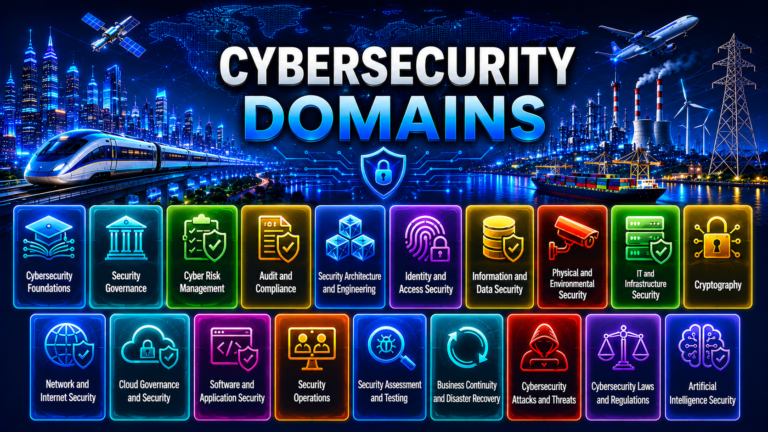
Cybersecurity is a multidisciplinary field comprising several specialized domains, each focusing on a specific aspect of protecting digital systems, information, infrastructure, and connected technologies. Although each domain has distinct objectives and responsibilities, they work together to establish an effective cybersecurity framework that safeguards the confidentiality, integrity, and availability of digital assets. Collectively, these domains provide a comprehensive and integrated approach to managing cyber risks, strengthening security, and building a secure, resilient, and protected digital world.
Cybersecurity Foundations
Cybersecurity Foundations provide the fundamental concepts, principles, terminology, and core knowledge upon which all other cybersecurity domains are built. This domain establishes an understanding of cybersecurity fundamentals, the confidentiality, integrity, and availability (CIA) triad, security principles, threats, vulnerabilities, attacks, security controls, risk concepts, and essential security practices. It serves as the foundation for understanding cybersecurity and enables learners and professionals to build knowledge across every other cybersecurity domain.
Security Governance
Security Governance establishes the strategic direction for cybersecurity by defining policies, standards, roles, responsibilities, and oversight mechanisms. It ensures that cybersecurity activities align with organizational objectives while promoting accountability, effective decision-making, and continuous improvement.
Cyber Risk Management
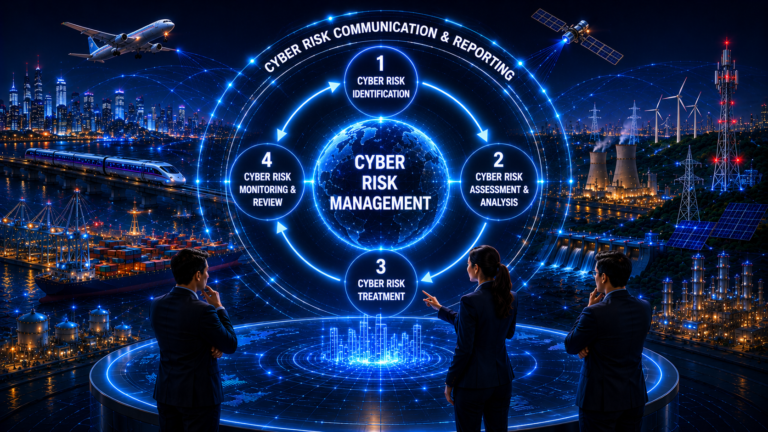
Risk Management focuses on identifying, assessing, evaluating, and treating cyber risks that may affect digital assets, systems, and services. It enables informed decision-making by helping organizations prioritize security efforts based on the likelihood and potential impact of cyber threats.
Audit and Compliance
Audit and Compliance evaluates whether cybersecurity practices align with organizational policies, industry standards, legal requirements, and regulatory obligations. It helps verify the effectiveness of security controls while supporting governance, accountability, and continual improvement.
Cybersecurity Architecture and Engineering
Cybersecurity Architecture and Engineering focuses on designing, implementing, and maintaining secure technology environments. It integrates security into systems, applications, networks, and infrastructure to build resilient, scalable, and secure digital solutions.
Identity and Access Security
Identity and Access Security ensures that users, devices, applications, and services can access only the resources they are authorized to use. It encompasses identity management, authentication, authorization, privileged access management, access governance, and identity lifecycle management.
Information and Data Security
Information and Data Security protects information throughout its lifecycle by ensuring its confidentiality, integrity, and availability. It includes data classification, encryption, privacy, secure storage, data protection, information governance, and lifecycle management.
Physical and Environmental Security
Physical and Environmental Security safeguards facilities, personnel, equipment, and supporting infrastructure from unauthorized physical access, theft, damage, sabotage, and environmental threats such as fire, flooding, power failures, and natural disasters.
IT and Infrastructure Security
IT and Infrastructure Security protects the computing platforms that support digital operations, including servers, operating systems, virtualization platforms, storage systems, endpoints, and core infrastructure services. It helps ensure that critical IT environments remain secure, reliable, resilient, and continuously available.
Cryptography
Cryptography protects information by using mathematical techniques to secure data during storage, processing, and transmission. It includes encryption, hashing, digital signatures, key management, public key infrastructure (PKI), and cryptographic protocols that ensure confidentiality, integrity, authentication, and non-repudiation.
Network and Internet Security
Network and Internet Security protects network infrastructure, internet-connected systems, communication protocols, and data transmitted across wired, wireless, and public networks. It focuses on securing connectivity, controlling network access, defending against network-based attacks, and maintaining the confidentiality, integrity, and availability of communications.
Cloud Governance and Security
Cloud Governance and Security addresses the secure adoption, governance, and operation of cloud computing environments. It includes cloud architecture, identity management, workload protection, data security, compliance, cloud-native security controls, and security across public, private, hybrid, and multi-cloud environments.
Software and Application Security
Software and Application Security integrates security throughout the software development lifecycle to reduce vulnerabilities and improve application resilience. It includes secure design, secure coding, application security testing, vulnerability management, software supply chain security, and secure software deployment.
Security Operations
Security Operations focuses on continuously monitoring, detecting, investigating, responding to, and recovering from cybersecurity incidents. It includes security monitoring, threat intelligence, incident response, digital forensics, threat hunting, and Security Operations Center (SOC) activities to maintain an organization’s security posture.
Security Assessment and Testing
Security Assessment and Testing evaluates the effectiveness of cybersecurity controls through activities such as security assessments, vulnerability assessments, penetration testing, configuration reviews, security audits, and continuous security validation. These activities help identify weaknesses and improve overall security resilience.
Business Continuity and Disaster Recovery
Business Continuity and Disaster Recovery ensures that critical systems, services, and business operations can continue or be restored following cyber incidents, system failures, or disasters. It strengthens organizational resilience through preparedness, recovery planning, backup strategies, disaster recovery, and regular testing.
Cybersecurity Attacks and Threats
Cybersecurity Attacks and Threats examines the evolving threat landscape, including threat actors, attack techniques, vulnerabilities, malware, ransomware, phishing, social engineering, insider threats, and advanced persistent threats (APTs). Understanding these threats enables organizations to implement effective preventive, detective, and responsive security measures.
Cybersecurity Laws and Regulations
Cybersecurity Laws and Regulations explores the legal, regulatory, and compliance requirements governing the protection of digital systems, information, and privacy. It includes cybersecurity legislation, privacy laws, industry-specific regulations, regulatory frameworks, and legal obligations that organizations must follow across different jurisdictions.
Artificial Intelligence Security
Artificial Intelligence Security focuses on protecting AI systems, machine learning models, training data, and AI-driven applications throughout their lifecycle. It includes securing AI infrastructure, defending against adversarial attacks, protecting AI models and datasets, ensuring trustworthy AI, and managing the secure, ethical, and responsible use of artificial intelligence.
Each cybersecurity domain addresses a specific aspect of protecting digital systems, information, infrastructure, and services. While every domain has distinct objectives, responsibilities, and areas of expertise, they are closely interconnected and work together to build a comprehensive cybersecurity program. Effective cybersecurity requires the integration of governance, risk management, architecture, technology, operations, compliance, resilience, and continuous collaboration across these domains. Together, they provide a structured and holistic approach to managing cyber risk, protecting digital assets, and enabling organizations to operate securely in an increasingly interconnected digital world.
Security Controls
While the CIA Triad defines the primary objectives of cybersecurity, organizations achieve these objectives by implementing security controls. Security controls are the safeguards, countermeasures, and protective measures used to reduce cyber risk, protect digital assets, and strengthen an organization’s overall security posture.
Security controls encompass more than security technologies. They include policies, procedures, management practices, physical safeguards, and technical solutions that work together to protect information, systems, applications, networks, devices, and infrastructure from a wide range of cyber threats. By implementing appropriate security controls, organizations can prevent attacks, detect suspicious activities, respond effectively to security incidents, and recover from disruptions.
No single security control can eliminate every cyber risk. Instead, organizations deploy multiple layers of controls that complement one another, creating a comprehensive and resilient cybersecurity posture.
Categories of Security Controls
Security controls are commonly grouped into three primary categories based on how they protect organizational assets: Administrative Controls, Technical Controls, and Physical Controls. Together, these categories provide a comprehensive approach to protecting people, processes, technology, and information.
Administrative Controls
Administrative controls are the policies, processes, procedures, and management practices that establish how cybersecurity is planned, implemented, and maintained within an organization. They provide the strategic direction for managing cyber risk and define the responsibilities, expectations, and rules that guide secure operations.
Administrative controls focus on governance, decision-making, and organizational processes rather than technology. They help ensure that cybersecurity activities align with business objectives, legal obligations, and industry best practices.
Examples of administrative controls include:
- Security policies and standards
- Security procedures and guidelines
- Risk assessments
- Security awareness and training
- Asset management
- Personnel security
- Vendor and third-party risk management
- Incident response planning
- Business continuity planning
- Compliance and audit activities
Administrative controls establish the foundation upon which technical and physical controls are implemented.
Technical Controls
Technical controls use hardware, software, and security technologies to protect digital systems, networks, applications, and information from cyber threats. These controls enforce security policies, restrict unauthorized access, monitor system activities, and protect digital assets against malicious attacks.
Technical controls operate continuously across the digital environment and play a critical role in preventing, detecting, and responding to cybersecurity incidents.
Examples of technical controls include:
- Firewalls
- Identity and Access Management (IAM)
- Multi-Factor Authentication (MFA)
- Endpoint Detection and Response (EDR)
- Antivirus and anti-malware solutions
- Intrusion Detection and Prevention Systems (IDS/IPS)
- Security Information and Event Management (SIEM)
- Encryption
- Web Application Firewalls (WAF)
- Data Loss Prevention (DLP)
As cyber threats evolve, organizations continually enhance their technical controls to address emerging risks and protect increasingly complex digital environments.
Physical Controls
Physical controls protect facilities, equipment, personnel, and supporting infrastructure from unauthorized physical access, theft, vandalism, environmental hazards, and other physical threats. Although cybersecurity often focuses on digital technologies, protecting the physical environment is equally important because physical access to systems can compromise digital security.
Physical controls help ensure that only authorized individuals can access critical facilities and technology resources.
Examples of physical controls include:
- Security guards
- Access cards
- Biometric authentication systems
- CCTV surveillance
- Visitor management systems
- Door locks and secure entry systems
- Fencing and perimeter protection
- Environmental monitoring systems
- Fire detection and suppression systems
- Secure server rooms and data centers
Physical controls complement administrative and technical controls by protecting the environments in which digital systems operate.
Functional Types of Security Controls
Security controls can also be classified according to the function they perform in protecting digital systems and information. Each type serves a different purpose, and organizations typically implement a combination of these controls to provide comprehensive protection.
Preventive Controls
Preventive controls are designed to stop security incidents before they occur. They reduce the likelihood of unauthorized access, malware infections, data breaches, and other cyber threats by blocking or limiting potential attack paths.
Examples include:
- Firewalls
- Multi-Factor Authentication (MFA)
- Encryption
- Network segmentation
- Endpoint protection
- Security awareness training
Detective Controls
Detective controls identify suspicious activities, security events, or policy violations that may indicate an attempted or successful cyberattack. Early detection enables organizations to respond quickly and minimize potential damage.
Examples include:
- Security Information and Event Management (SIEM)
- Intrusion Detection Systems (IDS)
- Audit logs
- File integrity monitoring
- Security monitoring
- User and Entity Behavior Analytics (UEBA)
Corrective Controls
Corrective controls are implemented after a security incident has occurred. Their purpose is to contain the impact of an incident, eliminate vulnerabilities, restore affected systems, and return operations to a secure state.
Examples include:
- Patch management
- Malware removal
- Password resets
- System restoration
- Vulnerability remediation
- Configuration updates
Deterrent Controls
Deterrent controls discourage unauthorized or malicious activities by increasing the perceived likelihood of detection or consequences. While they may not physically prevent an attack, they can reduce the willingness of individuals to attempt one.
Examples include:
- Warning banners
- CCTV signage
- Security guards
- Fencing
- Disciplinary policies
- Visible access control systems
Directive Controls
Directive controls provide guidance on how security should be implemented and maintained. They establish expectations, define acceptable behavior, and help ensure that users understand their security responsibilities.
Examples include:
- Security policies
- Security standards
- Procedures
- Acceptable use policies
- Password policies
- Security awareness programs
Compensating Controls
Compensating controls provide alternative safeguards when primary controls cannot be implemented because of technical, operational, financial, or business constraints. Although they may not offer identical protection, they reduce risk to an acceptable level.
Examples include:
- Enhanced security monitoring
- Network segmentation
- Manual approval processes
- Additional logging
- Dual authorization
- Increased security reviews
Recovery Controls
Recovery controls enable organizations to restore systems, services, and information following a cybersecurity incident or other disruptive event. These controls support business continuity by minimizing downtime and restoring normal operations as quickly as possible.
Examples include:
- Data backups
- Disaster recovery plans
- Business continuity plans
- System failover
- Data replication
- Recovery testing
Security controls work together to provide comprehensive protection across people, processes, technologies, and physical environments. While each control serves a specific purpose, their effectiveness depends on being implemented as part of a coordinated and layered security strategy. By combining administrative, technical, and physical controls with preventive, detective, corrective, deterrent, directive, compensating, and recovery controls, organizations can effectively reduce cyber risk, strengthen their security posture, and protect the confidentiality, integrity, and availability of digital assets.
Understanding Security Principles
While the CIA Triad defines the primary objectives of cybersecurity, security principles provide the fundamental concepts that guide how secure systems are designed, implemented, operated, and continuously improved. These principles help organizations build trustworthy, resilient, and secure digital environments while supporting effective risk management and business objectives.
Authentication
Authentication verifies the identity of users, devices, applications, or services before granting access to digital resources. It ensures that only trusted entities can interact with systems and information. Common authentication methods include passwords, Multi Factor Authentication (MFA), biometrics, certificates, and security tokens.
Authorization
Authorization determines the resources and actions that an authenticated user, device, or application is permitted to access. Permissions are granted according to security policies, business requirements, and the principle of least privilege. Effective authorization helps prevent unauthorized access to sensitive systems and information.
Accountability
Accountability ensures that actions performed within digital systems can be traced to specific users, devices, or processes. Logging, auditing, and monitoring provide evidence of activities and support investigations, governance, and regulatory compliance. Accountability also promotes responsible use of organizational resources.
Privacy
Privacy focuses on protecting personal and sensitive information throughout its lifecycle. It ensures that information is collected, processed, stored, shared, retained, and disposed of in accordance with legal, regulatory, and ethical requirements. Strong privacy practices help maintain trust and protect individual rights.
Least Privilege
The Principle of Least Privilege grants users, applications, and systems only the minimum permissions necessary to perform their intended functions. Restricting unnecessary access reduces the attack surface and limits the impact of accidental errors, insider threats, and compromised accounts. It is one of the most effective principles for reducing cyber risk.
Defense in Depth
Defense in Depth applies multiple layers of administrative, technical, and physical security controls to protect digital assets. If one control is bypassed or fails, additional controls continue to provide protection against cyber threats. This layered approach strengthens an organization’s overall security posture and resilience.
Zero Trust
Zero Trust is based on the principle of Never Trust, Always Verify. Every user, device, application, workload, and connection must be continuously authenticated, authorized, and validated before access is granted. Trust is established through continuous verification rather than network location.
Secure by Design
Secure by Design integrates security into systems, applications, infrastructure, and business processes from the earliest stages of planning and development. Security is considered throughout the entire lifecycle rather than being added after deployment. This approach reduces vulnerabilities and improves long term security.
Resilience
Resilience is the ability of an organization, system, or critical infrastructure to withstand, adapt to, respond to, and recover from cyber incidents while maintaining essential operations. It combines preventive, detective, corrective, and recovery capabilities to minimize disruption. Cyber resilience enables organizations to continue operating in an evolving threat landscape.
Security principles provide the foundation for designing, implementing, operating, and maintaining secure digital environments. While each principle addresses a specific aspect of cybersecurity, they work together to guide security decisions, shape security architectures, and influence the implementation of security controls and technologies. By applying these principles consistently, organizations can reduce cyber risk, strengthen resilience, protect digital assets, and build secure, trustworthy, and resilient digital environments.
Understanding Cybersecurity Technologies
Cybersecurity technologies are the hardware, software, platforms, and services used to implement security principles and enforce security controls across digital environments. They help protect users, systems, applications, networks, information, cloud environments, and connected devices from cyber threats while supporting the confidentiality, integrity, and availability of digital assets.
Modern organizations rely on multiple security technologies working together as part of a layered security strategy. Each technology addresses specific security challenges, but no single solution can protect every aspect of an organization’s digital environment. When combined with effective governance, risk management, security controls, and skilled personnel, cybersecurity technologies provide comprehensive protection against evolving cyber threats.
Identity Security Technologies
Identity Security Technologies verify the identities of users, devices, applications, and services while controlling access to digital resources. They ensure that only authenticated and authorized entities can access systems and information based on established security policies. Common technologies include Identity and Access Management (IAM), Multi-Factor Authentication (MFA), Privileged Access Management (PAM), Identity Governance and Administration (IGA), and Single Sign-On (SSO).
Endpoint Security Technologies
Endpoint Security Technologies protect desktops, laptops, servers, virtual machines, mobile devices, and other endpoints from malware, ransomware, unauthorized access, and other cyber threats. They continuously monitor endpoint activities, detect suspicious behavior, and help prevent, investigate, and respond to security incidents. Examples include Endpoint Protection Platforms (EPP), Endpoint Detection and Response (EDR), Extended Detection and Response (XDR), and Mobile Device Management (MDM).
Information and Data Security Technologies
Information and Data Security Technologies protect information throughout its lifecycle by preventing unauthorized access, disclosure, modification, and loss. They help organizations secure sensitive information stored, processed, and transmitted across digital environments while supporting privacy and regulatory compliance. Common technologies include encryption, Data Loss Prevention (DLP), Public Key Infrastructure (PKI), tokenization, and Key Management Systems (KMS).
Network Security Technologies
Network Security Technologies protect network infrastructure, communication channels, and internet connectivity from cyber threats. They monitor network traffic, control access, detect malicious activities, and secure communications between users, systems, and services. Examples include Firewalls, Intrusion Detection Systems (IDS), Intrusion Prevention Systems (IPS), Virtual Private Networks (VPN), Network Access Control (NAC), Secure Web Gateways (SWG), and Secure Access Service Edge (SASE).
Email Security Technologies
Email Security Technologies protect email communications from phishing, malware, spam, business email compromise, and other email-based threats. They inspect incoming and outgoing messages, filter malicious content, and help ensure secure and reliable email communication. Common technologies include Secure Email Gateways (SEG), anti-spam solutions, anti-malware protection, email encryption, and DMARC, SPF, and DKIM technologies.
Software and Application Security Technologies
Software and Application Security Technologies protect applications throughout the software development lifecycle and during production. They help identify vulnerabilities, secure application programming interfaces (APIs), and defend applications against cyberattacks. Examples include Web Application Firewalls (WAF), API Security, Static Application Security Testing (SAST), Dynamic Application Security Testing (DAST), Software Composition Analysis (SCA), and Runtime Application Self-Protection (RASP).
Cloud Security Technologies
Cloud Security Technologies secure cloud infrastructure, cloud workloads, cloud applications, and cloud data across public, private, hybrid, and multi-cloud environments. They help organizations maintain visibility, enforce security policies, protect cloud resources, and meet regulatory requirements. Common technologies include Cloud Access Security Broker (CASB), Cloud Security Posture Management (CSPM), Cloud Workload Protection Platform (CWPP), Cloud Native Application Protection Platform (CNAPP), and Cloud Infrastructure Entitlement Management (CIEM).
Security Operations Technologies
Security Operations Technologies enable organizations to continuously monitor, detect, investigate, respond to, and recover from cybersecurity incidents. They provide centralized visibility into security events and support threat detection, incident response, digital forensics, and threat intelligence. Examples include Security Information and Event Management (SIEM), Security Orchestration, Automation, and Response (SOAR), User and Entity Behavior Analytics (UEBA), Network Detection and Response (NDR), and Threat Intelligence Platforms (TIP).
Security Testing Technologies
Security Testing Technologies help organizations identify, assess, validate, and manage security weaknesses before they can be exploited by attackers. They support proactive security assessments and continuous improvement of an organization’s security posture. Common technologies include vulnerability scanners, penetration testing platforms, attack surface management, exposure management, breach and attack simulation (BAS), and security validation tools.
Cybersecurity technologies work together to provide comprehensive protection across the digital ecosystem. While each technology addresses a specific area of security, their effectiveness depends on proper integration with security principles, security controls, governance, and operational processes. Together, these technologies help organizations build resilient cybersecurity capabilities that protect modern digital environments against evolving cyber threats.
Building Cybersecurity Through Foundational Concepts
Cybersecurity is not achieved through a single technology, product, or security solution. Instead, it is built by combining well-defined security objectives, specialized domains, guiding principles, security controls, and cybersecurity technologies that work together to protect digital assets. Together, these foundational concepts provide a comprehensive framework for designing, implementing, operating, and continuously improving cybersecurity across modern digital environments.
CIA Triad establishes the primary objectives of cybersecurity by defining the need to protect the confidentiality, integrity, and availability of information and digital systems. These objectives guide every cybersecurity decision and establish what organizations ultimately seek to protect.
Cybersecurity Domains organize the discipline into specialized areas of knowledge and practice. Domains such as security governance, cyber risk management, identity and access security, cloud security, software security, security operations, and business continuity provide a structured approach to protecting different aspects of the digital ecosystem while collectively supporting an organization’s cybersecurity program.
Security Principles provide the fundamental concepts that guide how cybersecurity is designed, implemented, operated, and maintained. Principles such as authentication, authorization, least privilege, defense in depth, zero trust, secure by design, and resilience influence security decisions, architecture, operational practices, and risk management throughout the cybersecurity lifecycle.
Security Controls provide the safeguards that enable organizations to achieve the objectives of the CIA Triad while applying cybersecurity principles in practice. Administrative controls establish governance and direction, technical controls protect digital systems through security technologies, and physical controls safeguard facilities, personnel, and supporting infrastructure. Together, these controls help prevent cyberattacks, detect malicious activities, respond to security incidents, and recover from disruptions.
Cybersecurity Technologies provide the practical capabilities required to implement security controls and enforce security policies across digital environments. Identity security, endpoint security, data security, network security, email security, application security, cloud security, security operations, and security testing technologies work together to protect digital assets against evolving cyber threats.
Although each of these foundational concepts serves a distinct purpose, they are closely interconnected. The CIA Triad defines the objectives of cybersecurity, cybersecurity domains organize the discipline into specialized areas, security principles guide security decisions, security controls provide the necessary safeguards, and cybersecurity technologies implement those safeguards. Together, they establish a comprehensive and integrated approach to managing cyber risk, protecting digital assets, and strengthening organizational resilience.
Effective cybersecurity also requires collaboration across the entire organization. Executive leadership establishes the strategic direction, cybersecurity professionals design and operate security capabilities, IT teams maintain technology platforms, business units follow organizational policies, and employees contribute by practicing secure behaviors and protecting organizational information. Cybersecurity is a shared responsibility that extends beyond technology and involves everyone who interacts with digital systems.
As technologies continue to evolve and cyber threats become increasingly sophisticated, these foundational concepts remain constant. By combining clearly defined objectives, specialized domains, guiding principles, effective security controls, and appropriate cybersecurity technologies, organizations can build resilient cybersecurity programs that protect digital assets, support business operations, and enable secure digital transformation.
This integrated understanding provides a strong foundation for exploring the evolution of cybersecurity and its role in protecting today’s interconnected digital world.
The Evolution of Cybersecurity
Cybersecurity has evolved continuously alongside advances in technology. As computers became interconnected, businesses embraced digital transformation, and new technologies emerged, the scope of cybersecurity expanded far beyond protecting individual computers. Today, cybersecurity encompasses the protection of people, processes, technologies, information, digital services, and critical infrastructure. Understanding this evolution helps explain why cybersecurity has become an essential discipline in the modern digital world.
The Evolution of Computers
The earliest computers were standalone systems used primarily by governments, research institutions, universities, and large enterprises. Since these systems operated independently with limited connectivity, security focused mainly on physical protection, authorized access, and safeguarding stored information. Although cyber threats were relatively uncommon, protecting valuable computing resources and sensitive information marked the beginning of modern information security practices.
The Evolution of Computer Networks
As organizations began connecting computers through Local Area Networks (LANs) and Wide Area Networks (WANs), they gained the ability to share information, applications, and computing resources more efficiently. While networking significantly improved collaboration and productivity, it also introduced new security challenges such as unauthorized access, network attacks, and malware propagation. This shift drove the development of network security technologies and access control mechanisms.
The Evolution of the Internet
The widespread adoption of the Internet transformed computing into a globally connected digital ecosystem. Businesses, governments, and individuals increasingly relied on websites, email, e-commerce, online banking, and digital communication to deliver services and exchange information. Although the Internet created unprecedented opportunities for innovation and connectivity, it also dramatically expanded the cyber attack surface, enabling cybercriminals to target organizations and individuals from anywhere in the world.
The Evolution of Enterprise Computing
As organizations adopted enterprise applications, client-server computing, data centers, virtualization, and centralized information systems, technology became a critical component of business operations. Cybersecurity evolved beyond protecting individual systems to securing enterprise-wide environments, requiring organizations to implement structured security governance, risk management practices, security architectures, and dedicated security operations to protect increasingly complex infrastructures.
The Evolution of the Digital World
The rapid growth of cloud computing, mobile technologies, Software-as-a-Service (SaaS), Application Programming Interfaces (APIs), big data, and the Internet of Things (IoT) accelerated digital transformation across every industry. Organizations now operate within highly connected digital ecosystems that extend beyond traditional corporate networks. As digital dependence increased, cybersecurity expanded to protect cloud environments, remote users, digital identities, connected devices, and the vast amounts of information that flow across modern digital platforms.
The Evolution of Smart Infrastructure
Technology has expanded beyond traditional IT environments into operational technology (OT), industrial control systems (ICS), smart cities, healthcare, transportation, manufacturing, energy, and other forms of critical infrastructure. These interconnected environments support essential services that societies depend upon every day. As a result, cybersecurity has evolved to protect not only information systems but also operational systems whose compromise could have significant economic, environmental, or public safety consequences.
The Evolution of Artificial Intelligence
Artificial Intelligence (AI) is transforming the cybersecurity landscape by enabling intelligent automation, advanced threat detection, behavioral analytics, and automated incident response. At the same time, cybercriminals are leveraging AI to develop more sophisticated attacks, including intelligent phishing campaigns, deepfake-enabled social engineering, and AI-assisted malware. As AI adoption continues to grow, securing AI systems and defending against AI-driven threats have become increasingly important areas of cybersecurity.
The evolution of cybersecurity reflects the continuous advancement of technology and the expanding digital ecosystem. From protecting standalone computers to securing interconnected networks, cloud platforms, enterprise environments, smart infrastructure, and Artificial Intelligence systems, cybersecurity has grown into a comprehensive discipline that safeguards every aspect of the digital world. Although technologies, threats, and business requirements continue to evolve, the fundamental objectives of cybersecurity remain unchanged: protecting information and digital assets, managing cyber risk, maintaining resilience, and enabling organizations and society to operate securely in an increasingly connected environment.
The Cybersecurity Landscape
Cybersecurity extends across a vast and interconnected digital ecosystem that supports individuals, businesses, governments, educational institutions, healthcare, industries, and critical infrastructure. Every digital asset that stores, processes, transmits, or manages information has the potential to become a target for cyber threats. As technology has evolved, the scope of cybersecurity has expanded beyond protecting individual computers to securing diverse digital environments consisting of people, processes, technologies, and information.
The cybersecurity landscape includes a wide range of interconnected components, including:
- Users and digital identities
- Endpoints such as desktops, laptops, servers, tablets, and mobile devices
- Computer networks and communication infrastructure
- Applications, web services, and Application Programming Interfaces (APIs)
- Information, databases, and digital records
- Cloud computing platforms and cloud services
- Data centers and supporting infrastructure
- Internet of Things (IoT) devices
- Operational Technology (OT) and Industrial Control Systems (ICS)
- Artificial Intelligence (AI) systems and intelligent applications
- Third-party services and digital supply chains
- Critical infrastructure supporting essential services
These components rarely operate in isolation. They continuously exchange information, provide digital services, enable communication, and support countless activities that people depend on every day. While this interconnected ecosystem delivers significant benefits, it also creates numerous opportunities for cyber threats to exploit vulnerabilities across different technologies and environments.
Protecting this digital ecosystem requires a comprehensive approach that combines sound security principles, effective security controls, governance, risk management, continuous monitoring, security awareness, and resilience. Each element contributes to reducing cyber risk and strengthening the overall security posture of the environments in which digital technologies operate.
The cybersecurity landscape continues to evolve as new technologies, digital services, and connected environments emerge. From personal devices and online services to cloud platforms, smart infrastructure, and intelligent systems, cybersecurity plays a fundamental role in protecting information, supporting reliable digital services, reducing cyber risks, and fostering trust across the interconnected digital world.
Why Cybersecurity Matters
Digital technologies have become an integral part of everyday life, enabling communication, commerce, education, healthcare, financial services, manufacturing, transportation, entertainment, scientific research, public services, and countless other activities. As dependence on digital systems continues to grow, protecting these systems and the information they process has become increasingly important.
Cyber threats can affect anyone who uses digital technology, including individuals, businesses, governments, educational institutions, healthcare providers, and operators of critical infrastructure. A successful cyberattack can result in unauthorized access to sensitive information, financial losses, operational disruption, identity theft, reputational damage, intellectual property theft, and the interruption of essential services.
Cybersecurity helps reduce these risks by protecting digital assets and ensuring that systems, applications, networks, and information remain secure, reliable, and available. It enables people and organizations to use digital technologies with greater confidence while supporting innovation, productivity, and digital transformation.
Effective cybersecurity contributes to:
- Protecting personal and sensitive information
- Safeguarding digital identities and privacy
- Maintaining the confidentiality, integrity, and availability of information
- Reducing cyber risks and security incidents
- Supporting business continuity and operational resilience
- Protecting intellectual property and digital assets
- Enabling secure online communication and digital transactions
- Supporting compliance with legal and regulatory requirements
- Protecting essential services and critical infrastructure
- Building trust in digital technologies and services
Cybersecurity is no longer limited to defending against cyberattacks. It enables the secure adoption of emerging technologies, supports economic growth, protects national interests, and helps maintain confidence in an increasingly connected digital ecosystem.
As technology continues to evolve, cybersecurity remains a shared responsibility. Governments, organizations, technology providers, educational institutions, communities, and individuals all contribute to creating a safer and more resilient digital environment. By adopting sound cybersecurity practices and promoting a culture of security, the benefits of digital innovation can be realized while effectively managing the risks that accompany an interconnected world.
Conclusion
Cybersecurity has become a fundamental discipline that supports the secure operation of the modern digital world. As technology continues to evolve, digital systems become more interconnected, and cyber threats become increasingly sophisticated, the need to protect information, systems, services, and critical infrastructure continues to grow.
Cybersecurity is built upon fundamental principles, effective security controls, sound governance, risk management, and continuous collaboration across people, processes, and technologies. Together, these elements create a comprehensive approach to protecting digital assets while supporting the confidentiality, integrity, and availability of information.
Cybersecurity extends far beyond protecting computers and networks. It safeguards the technologies and digital services that enable communication, education, healthcare, financial services, commerce, manufacturing, transportation, scientific research, government operations, and critical infrastructure. By reducing cyber risks and strengthening resilience, cybersecurity helps ensure that these essential services remain secure, reliable, and available.
As the digital world continues to expand and technology becomes increasingly integrated into everyday life, cybersecurity will remain essential to protecting individuals, organizations, communities, and nations. Through continuous innovation, collaboration, education, and responsible security practices, cybersecurity helps build a secure, resilient, and protected digital world, enabling society to embrace technological advancement with confidence.