Academic and Industry Knowledge in Cybersecurity Careers
Introduction
Building a successful cybersecurity career requires more than gaining experience and learning the latest technologies. As cyber threats evolve and new technologies emerge, cybersecurity professionals must continuously expand their knowledge to remain effective, relevant, and competitive throughout their careers.
Professional growth is often associated with learning new security products, cloud platforms, programming languages, frameworks, and certifications. While these are important, they represent only one dimension of career development. Lasting technical expertise comes from combining practical industry knowledge with the academic foundations that explain how technologies work.
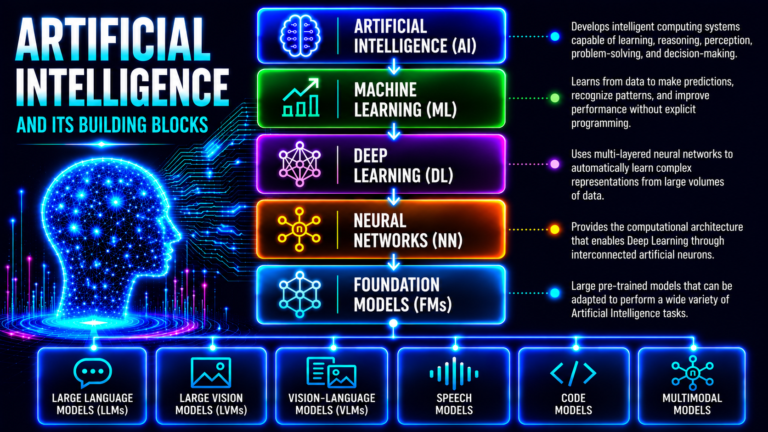
Every cybersecurity technology has an academic foundation. Cryptography is built on mathematics. Computers and networks are built on principles of physics, electronics, and chemistry. Artificial intelligence combines mathematics, computer science, and concepts inspired by biology. Although cybersecurity professionals do not need to become experts in these disciplines, understanding their fundamentals provides valuable insight into the technologies they secure every day.
The most accomplished cybersecurity professionals do more than learn what a technology does or how to configure it. They also strive to understand why it works. This deeper understanding strengthens technical reasoning, improves problem solving, accelerates learning, and builds knowledge that remains valuable even as technologies continue to evolve. possible. Doing so will not only strengthen your professional capabilities but also make your career more engaging and intellectually rewarding.
Academic Knowledge vs. Industry Knowledge
Knowledge is one of the most valuable assets in any profession. It enables professionals to understand complex problems, make informed decisions, adapt to technological change, and continue growing throughout their careers. In cybersecurity, professional knowledge can be broadly classified into two complementary categories: academic knowledge and industry knowledge.
What Is Academic Knowledge?
Academic knowledge is the knowledge gained through formal education, scientific research, scholarly study, and continuous learning. It focuses on understanding the principles, concepts, models, and scientific foundations that explain how technologies work.
It is built upon disciplines such as mathematics, computer science, physics, chemistry, and biology. These subjects have contributed to the development of modern computing, networking, artificial intelligence, and cybersecurity.
Academic knowledge goes beyond memorizing facts or learning theories. It develops analytical thinking, scientific reasoning, and a deeper understanding of the concepts that make technology possible.
What Is Industry Knowledge?
Industry knowledge is the practical understanding gained through professional experience and the application of technologies in real world environments. It is developed by designing, implementing, operating, managing, and securing systems that support business objectives.
Industry knowledge includes working with enterprise networks, cloud platforms, operating systems, security products, cybersecurity frameworks, governance, compliance, and operational processes.
Why Both Matter in Cybersecurity
Academic knowledge and industry knowledge are not separate paths. They complement each other and together build well rounded cybersecurity professionals.
Industry knowledge teaches professionals how to deploy and manage technologies effectively. Academic knowledge explains the principles that make those technologies possible.
For example, a cybersecurity professional may know how to configure a VPN to establish a secure connection. Academic knowledge explains that the encryption protecting the VPN is built upon mathematical concepts such as prime numbers and number theory. Likewise, understanding the basic principles of physics helps explain how wireless communication works, while chemistry helps us appreciate how semiconductor technology makes modern computing possible.
Technology continues to evolve throughout every cybersecurity career. Products, vendors, and security platforms will continue to change. The scientific and mathematical foundations behind those technologies remain remarkably consistent. Professionals who continue learning both academic and industry knowledge develop stronger technical reasoning, solve problems more effectively, and adapt more confidently to emerging technologies.
Mathematics: The Foundation of Cryptography
Cryptography is one of the most important pillars of modern cybersecurity. It protects the confidentiality, integrity, authenticity, and non repudiation of digital information. Whether you establish a VPN connection, browse an HTTPS website, use SSH, exchange encrypted emails, or digitally sign a document, cryptography is working behind the scenes to secure your data.
Although cryptography is often viewed as a cybersecurity technology, its true foundation is mathematics.
Computers represent every piece of information as binary data using zeros and ones. During encryption, mathematical operations transform readable binary data into an unreadable format known as ciphertext. During decryption, additional mathematical operations convert the ciphertext back into its original form. These operations are performed by cryptographic algorithms that are built upon mathematical principles developed through centuries of research.
Why Mathematics Matters
Mathematics provides the logic and structure that make modern cryptography possible. Rather than relying on secrecy alone, cryptographic algorithms depend on mathematical problems that are easy to perform but extremely difficult to reverse without the correct cryptographic key.
This mathematical strength enables secure communication over untrusted networks such as the Internet.
Mathematical Foundations of Cryptography
Modern cryptography draws upon several branches of mathematics. Some of the most important include:
- Prime Numbers provide the basis for generating cryptographic keys in many public key cryptographic systems.
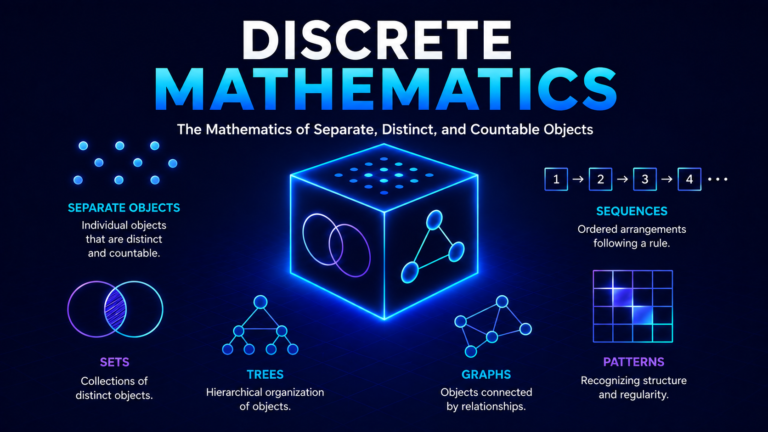
- Number Theory studies the properties and relationships of whole numbers and forms the foundation of many public key algorithms.
- Modular Arithmetic performs mathematical calculations within a fixed range and is widely used throughout modern cryptography.
- Finite Field Mathematics provides the mathematical framework for many symmetric encryption algorithms, including the Advanced Encryption Standard (AES).
- Abstract Algebra introduces mathematical structures such as groups, rings, and fields that support advanced cryptographic techniques.
- Probability and Statistics help generate secure random numbers, cryptographic keys, salts, initialization vectors, and nonces.
- Computational Complexity explains why certain mathematical problems are practical to compute but extremely difficult to solve without the correct information, making many cryptographic systems secure.
From Mathematics to Cryptographic Algorithms
These mathematical concepts are transformed into cryptographic algorithms that secure digital communications.
For example:
- RSA uses prime numbers, number theory, and modular arithmetic to generate public and private keys.
- Diffie Hellman (DH) uses number theory and modular arithmetic to establish a shared secret key between two parties.
- Elliptic Curve Cryptography (ECC) applies number theory and elliptic curve mathematics to provide strong security with smaller key sizes.
- Advanced Encryption Standard (AES) uses finite field mathematics and mathematical transformations to encrypt and decrypt data efficiently.
Although these algorithms use different mathematical techniques, they all demonstrate the same principle. Modern cryptography is the practical application of mathematics.
From Cryptography to Cybersecurity
Cryptographic algorithms protect information throughout its lifecycle. They secure VPN connections, HTTPS websites, SSH sessions, wireless communications, digital certificates, digital signatures, encrypted storage, cloud services, financial transactions, and countless other technologies used every day.
Most cybersecurity professionals learn how to deploy and manage these technologies. Understanding the mathematical foundations behind them provides a deeper appreciation of why they are secure. Products, vendors, and cryptographic implementations will continue to evolve, but the mathematical principles that underpin modern cryptography remain one of the most enduring academic foundations of cybersecurity.
Science Behind Computing and Networking
Modern computing and networking are built upon mathematics, electrical engineering, and electronics. Every computer, server, smartphone, router, switch, wireless access point, and storage device depends on mathematical principles and engineering disciplines that transform scientific discoveries into practical technologies.
Humans naturally represent numbers using the decimal number system, while computers process, store, and communicate information using the binary number system. Every document, image, video, email, database record, and network packet is ultimately represented as binary data using zeros and ones. To make binary information easier to read and analyse, computer scientists and cybersecurity professionals also use hexadecimal notation when working with memory, network packets, cryptographic keys, malware analysis, and digital forensics.
Computers continuously perform mathematical operations such as binary addition, subtraction, multiplication, division, logical operations, and floating point calculations to process digital information. Every instruction executed by a processor, every calculation performed by software, and every encrypted message relies on these mathematical operations.
These mathematical operations are carried out by billions of transistors built into processors and memory chips. Modern computers and networking equipment are products of electrical engineering and electronics, which are themselves founded on the principles of physics and chemistry.
Physics explains electricity, electronics, electromagnetism, light, and radio waves. These principles make it possible for computers to process electrical signals and for networks to transmit information through copper cables, optical fibre, and wireless communication technologies such as Wi Fi, Bluetooth, satellite communication, and mobile networks.
Chemistry and materials science enable the development of silicon semiconductors, integrated circuits, processors, memory chips, storage devices, and batteries that power modern computing systems. Without advances in materials science and semiconductor manufacturing, today’s computing devices would not exist.
Cybersecurity protects the technologies built upon these academic foundations. Every firewall, VPN, intrusion detection system, cloud platform, endpoint protection solution, and security appliance ultimately depends on mathematical computations, electronic hardware, and communication networks. Understanding these foundations helps cybersecurity professionals appreciate not only how technology works, but also why it works.
Conclusion
A successful cybersecurity career is built on more than experience and technology alone. It is built on a continuous commitment to learning and a desire to understand the foundations that make modern cybersecurity possible.
Industry knowledge enables professionals to implement, operate, and secure technologies in real world environments. Academic knowledge provides the mathematical and scientific foundations that explain how those technologies work. Together, they create a stronger understanding of cybersecurity and support better technical judgement throughout a professional’s career.
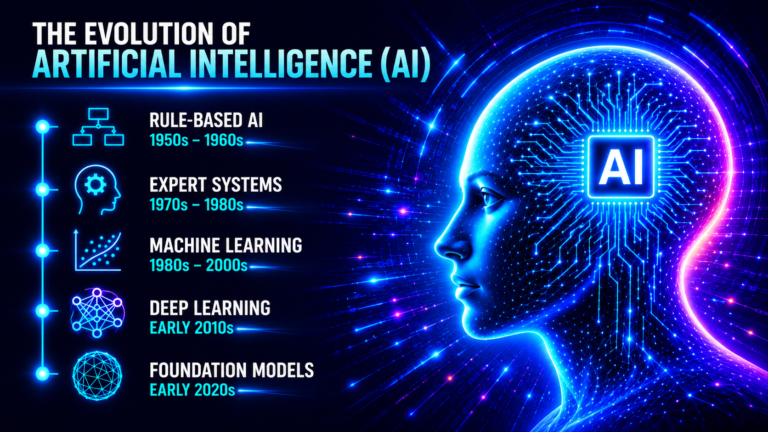
The technologies we use today will continue to evolve. New security products will emerge, cryptographic algorithms will advance, computing platforms will change, and artificial intelligence will continue to reshape the cybersecurity landscape. Yet the academic disciplines that underpin these innovations remain fundamental to understanding and securing them.
Every cybersecurity professional does not need to become a mathematician, physicist, chemist, or biologist. However, developing a basic understanding of these disciplines provides valuable insight into the technologies used every day and encourages a deeper appreciation of the science behind cybersecurity.
Never stop learning. Explore new technologies, strengthen your practical experience, and continue building your academic foundations. The strongest cybersecurity professionals understand what technology does, how it works in practice, and why it works in the first place.