Understanding Ports
Introduction
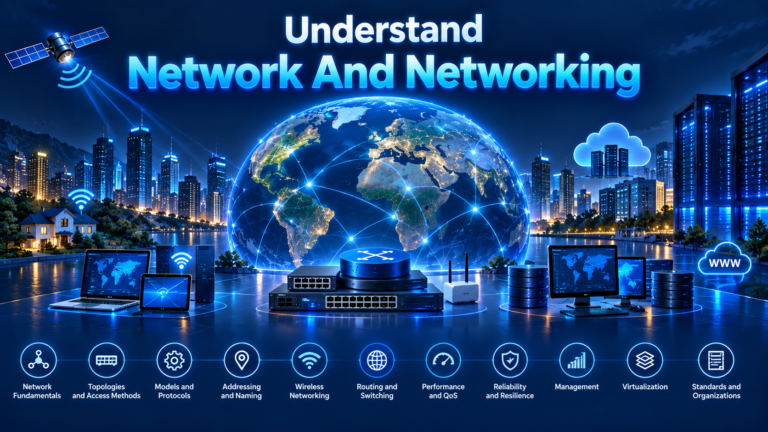
Network communication allows users, systems, services, and applications to exchange information across interconnected networks. A host may provide multiple network services at the same time, so communication needs a mechanism for distinguishing between different communication endpoints.
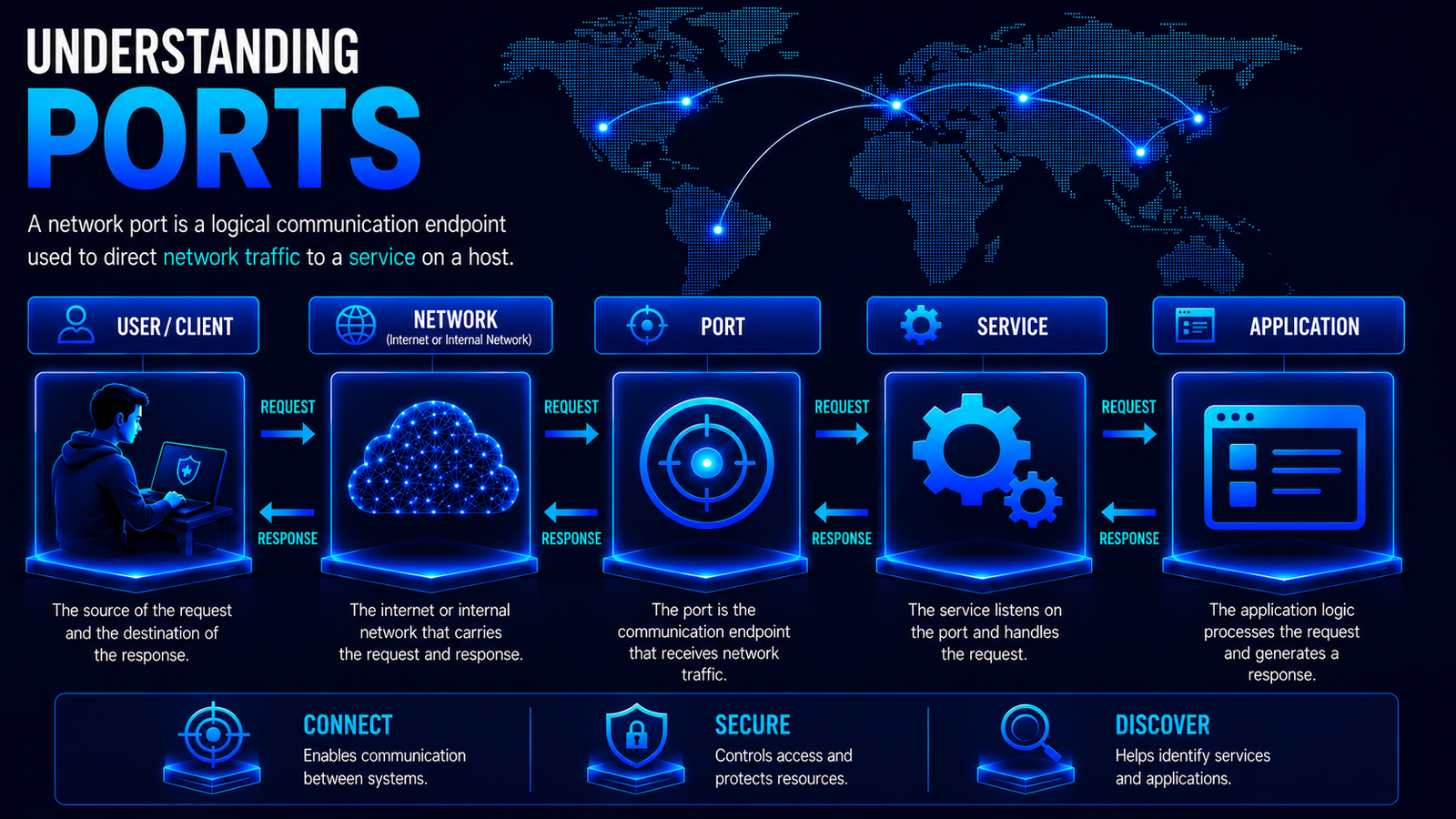
A network port is a logical communication endpoint used to direct network traffic to a service on a host.
Ports work with transport protocols such as TCP and UDP. Service names and port numbers are used to distinguish different services operating over transport protocols, and IANA maintains the authoritative Service Name and Transport Protocol Port Number Registry.
Understanding ports provides an important foundation for understanding network services, application communication, firewalls, network security, network monitoring, security assessment, and network reconnaissance.
What Is a Network Port?
A network port is a logical communication endpoint associated with network communication on a host.
An IP address provides addressing information for a network destination, while a port provides additional identification for a transport-layer communication endpoint associated with that destination.
A host can provide multiple network services simultaneously. Ports allow the networking stack to distinguish communication intended for different services.
A network port is therefore not a physical connector. It is a logical concept implemented through the host’s networking stack and operating system.
Why Are Ports Needed?
A host may provide several different network services at the same time. When traffic reaches the host, the destination IP address identifies the destination host, but that information alone does not identify which network service should receive the communication.
The destination port provides an additional level of identification.
This allows multiple network services to operate on the same host while maintaining separate communication endpoints.
For example, a single host can provide web access, remote administration, file sharing, database connectivity, and other network services simultaneously. Transport-layer port information helps the host distinguish communication intended for these different endpoints.
Ports, Network Services, and Applications
A port, network service, and application represent different but related aspects of network communication. Understanding their relationship is important because a port does not represent the service or application itself.
An application is software that provides functionality to a user, system, or another application. When that functionality is made available through a network, it can be exposed through a network service.
A network service provides functionality that can be accessed through network communication. The service typically uses a transport-layer communication endpoint identified by a port.
The port provides the logical communication endpoint through which the network service can receive or send network traffic.
For example, a web server application can provide a web service. The service uses a transport endpoint identified by a port, while the application processes requests and produces responses.
The port therefore should not be interpreted as an application identifier. The port identifies a logical communication endpoint, the service represents network-accessible functionality associated with that endpoint, and the application provides the underlying functionality.
The relationship can vary depending on the system’s architecture. One application may provide multiple network services, a service may support multiple application components, and an application may use multiple ports or transport endpoints.
This distinction is particularly important when examining network-discovery results. A tool may first identify an accessible port, then determine the likely service associated with it, and potentially identify the application or software providing that service. Port identification, service identification, and application identification are related stages of analysis, but they are not the same thing.
RFC 6335 also describes ports as logical entities used for Internet communication and notes their role in distinguishing transport sessions and identifying application protocols and associated services.
Ports and IP Addresses
IP addresses and network ports serve different but complementary purposes in network communication.
An IP address provides addressing information used to identify a network destination, while a port provides transport-layer identification for a logical communication endpoint associated with that destination.
A single host can therefore support multiple network services without requiring a separate IP address for every service.
The combination of the destination IP address, transport protocol, and destination port provides more specific information about where network communication is intended to be delivered.
The distinction is important because an IP address identifies the network destination, while a port helps identify the communication endpoint associated with a service on that destination.
Ports and the OSI Model
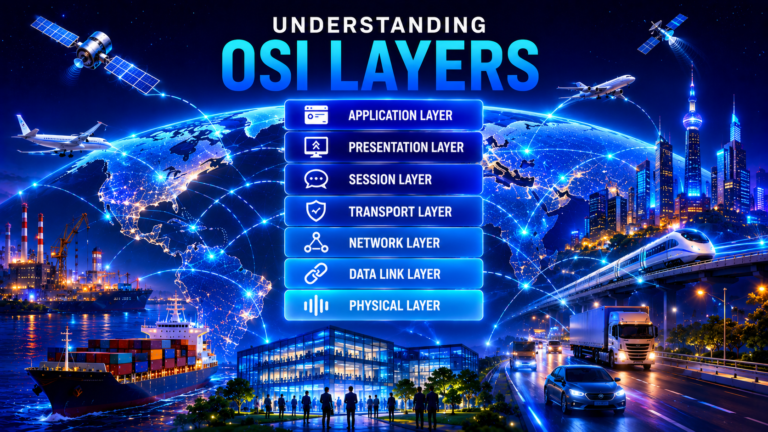
Network ports are associated with the Transport Layer (Layer 4) of the OSI model.
The Network Layer (Layer 3) provides logical addressing and packet delivery using protocols such as IP.
The Transport Layer (Layer 4) operates above the Network Layer and provides end-to-end communication between applications. It uses port numbers to identify transport-layer communication endpoints. TCP and UDP are common transport protocols that use source and destination port numbers.
The Application Layer (Layer 7) provides application-level functionality and protocols that use underlying transport services for network communication. Applications do not directly use a port as an application identifier; rather, network services associated with applications use transport-layer endpoints identified by ports.
The relevant layers can therefore be viewed hierarchically:
- Layer 3 – Network Layer: Logical addressing and packet delivery
- Layer 4 – Transport Layer: End-to-end transport communication and port identification
- Layer 7 – Application Layer: Application-level functionality and protocols
The Transport Layer is therefore the layer most directly associated with network ports, while the Network Layer provides IP addressing and the Application Layer provides application-level functionality.
The OSI model is a conceptual reference model, so real-world networking implementations do not always map perfectly to individual layers. Nevertheless, the Transport Layer provides the appropriate conceptual location for TCP and UDP port numbers.
Ports and the Operating System
Network ports are implemented through the host’s networking stack.
The operating system manages network communication and maintains associations between transport endpoints and processes or services. When traffic arrives, the networking stack examines information such as the transport protocol and destination port to determine how the communication should be handled.
A service can therefore listen on a particular port, allowing the operating system to deliver applicable network traffic to the appropriate process.
This is why a network port is appropriately described as a logical communication endpoint, rather than a physical interface.
The physical network interface provides connectivity to the network, while logical ports provide differentiation between transport-layer communication endpoints.
How Ports Participate in Communication
When a client communicates with a network service, the communication contains addressing information that allows the networking stack to identify the source and destination.
The destination IP address identifies the destination host, while the destination port identifies the intended transport-layer endpoint on that host.
Once the traffic reaches the host, the operating system’s networking stack processes the transport information and associates the communication with the appropriate endpoint and service.
The service can then handle the network communication and provide access to the required application functionality.
Ports therefore participate in communication by helping identify where transport-layer traffic should be delivered within a host.
Request and Response
Network communication commonly involves a request from a client and a response from the destination system.
A request sent by a client is transported across the network toward the destination host. The destination port identifies the relevant communication endpoint, allowing the networking stack to associate the traffic with the appropriate service.
The service handles the network communication and may pass the relevant request to the application for processing. The application can then generate an appropriate response.
The response is returned to the client through the established communication mechanism.
The port is therefore an important part of the communication path, but it should not be thought of as the component that processes the application request.
The service handles network-accessible functionality, while the application provides the underlying application functionality.
Source Ports and Destination Ports
Network communication generally involves both a source port and a destination port.
The source port identifies the originating transport endpoint, while the destination port identifies the intended transport endpoint on the receiving host.
TCP explicitly includes source and destination port fields in its transport header. Both fields are 16 bits in the TCP header.
This distinction allows a host to maintain multiple simultaneous communications.
A client may establish several communications with the same destination host while using different source ports. The combination of source and destination addressing and port information allows the networking stack to distinguish those communications.
Port Numbers
Port numbers are numerical identifiers used by transport protocols.
TCP and UDP use a 16-bit port-number space, providing values from 0 through 65535.
A port number is also associated with a transport protocol. Therefore, a numerical port value used with TCP represents a different transport endpoint from the same numerical value used with UDP.
Port Number Management and Assignment
Internet service names and port-number assignments are maintained through the Service Name and Transport Protocol Port Number Registry, administered by the Internet Assigned Numbers Authority (IANA). The registry is the authoritative source for current service-name and port-number assignments.
The Internet Engineering Task Force (IETF) develops Internet standards and procedures that govern protocols and port-number management. RFC 6335 defines the procedures used for managing the Service Name and Transport Protocol Port Number Registry.
The roles can therefore be understood as follows:
- IETF develops Internet standards and relevant procedures.
- IANA administers the Service Name and Transport Protocol Port Number Registry and maintains port-number assignments according to the applicable procedures.
- RFCs document technical standards and procedures.
It is therefore more accurate to say that IANA maintains and administers the port-number registry, while the IETF develops the standards and procedures governing Internet protocols and related port-number management.
The registry also makes an important distinction between port assignment and actual use. Assignment of a port number does not guarantee that traffic using that port corresponds to the registered service or that the traffic is legitimate.
Well-Known, Registered, and Dynamic Ports
System or Well-Known Ports
System Ports, commonly called Well-Known Ports, occupy the range from 0 through 1023.
They are associated with standardized services and protocols and are subject to specific assignment procedures.
User or Registered Ports
User Ports, commonly called Registered Ports, occupy the range from 1024 through 49151.
They can be registered for specific services and applications through the applicable IANA procedures.
Dynamic or Private Ports
Dynamic or Private Ports occupy the range from 49152 through 65535.
These ports are commonly used dynamically for temporary communication endpoints and are not assigned by IANA.
Listening Ports
A service that is prepared to accept incoming network communication is commonly described as listening on a port.
Listening means that a process or service has established a transport endpoint and is prepared to receive applicable network traffic.
A service can listen on any valid port number within the 0–65535 port-number space. However, network services commonly use System Ports (0–1023) or User/Registered Ports (1024–49151) when a standardized or registered port is appropriate. Dynamic/Private Ports (49152–65535) are generally intended for dynamic use rather than permanent service assignments.
When traffic reaches the host and matches the appropriate transport endpoint, the operating system can deliver the communication to the associated process.
Listening ports are therefore important when understanding the network exposure of a host.
A listening port does not automatically mean that the service is accessible from every network. Firewalls, access controls, routing, network segmentation, and other controls can affect whether the endpoint can actually be reached.
Open, Closed, and Filtered Ports
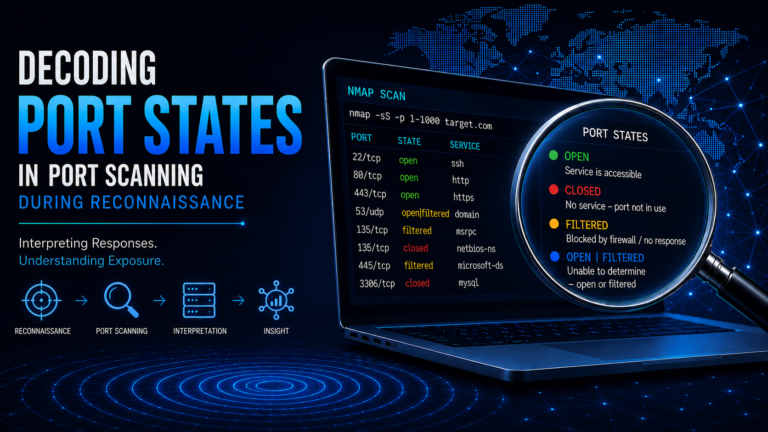
When network connectivity is examined, ports are commonly described as open, closed, or filtered.
Open Ports
An open port generally indicates that a service or process is accepting communication at that endpoint.
Closed Ports
A closed port generally indicates that the host is reachable but no service is accepting communication at that endpoint.
Filtered Ports
A filtered port generally indicates that a firewall, packet filter, or other network control prevents the observer from determining the port’s state directly.
These terms describe observed network behavior. They do not, by themselves, identify the application operating behind the port.
Ports and Network Services
Ports are particularly important when studying network services.
A network service provides functionality that can be accessed through network communication. For that functionality to be reachable, the service typically needs an appropriate transport endpoint.
The port provides the communication endpoint, while the service provides network-accessible functionality. The application provides the underlying application functionality.
These concepts are related but should not be treated as interchangeable terms.
A single application can provide multiple network services, and different applications can provide services using different ports and transport protocols.
Ports and Firewalls
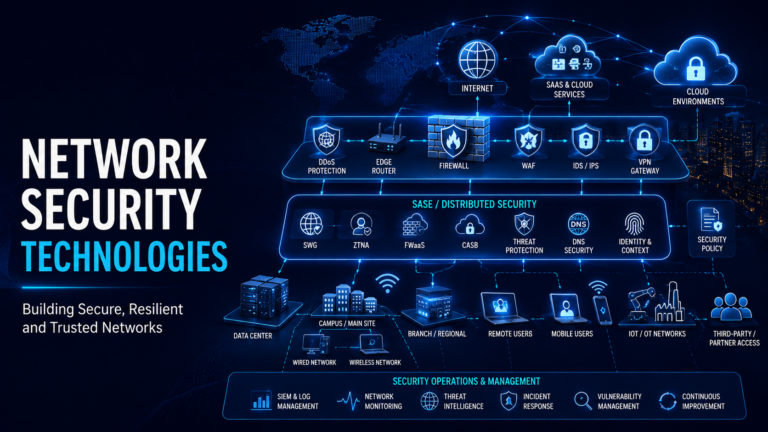
Firewalls can use port information as part of their traffic-control decisions.
Depending on the firewall and its configuration, policies can consider factors such as:
- Source IP address
- Destination IP address
- Transport protocol
- Source port
- Destination port
- Connection state
- Direction of traffic
- Other packet or session characteristics
A firewall can therefore allow, restrict, or block communication involving particular network endpoints.
However, allowing access to a port does not mean that the underlying application is secure. Port-based filtering is only one part of network security.
Ports and Network Discovery
Network discovery tools can examine hosts and provide information about accessible ports.
Tools such as Nmap can identify information including:
- Host availability
- Accessible ports
- Transport protocols
- Port states
- Possible services
- Additional service or application information
Port discovery is therefore often an initial step in understanding the network exposure of a host.
However, discovering a port does not automatically establish which application is operating behind it.
Further service identification may be required.
Ports and Service Identification
Service identification goes beyond determining whether a port is accessible.
Additional information can be obtained by examining how the endpoint responds, which protocol behavior it demonstrates, and what service characteristics it exposes.
This allows analysis to move from an observed communication endpoint toward understanding the service and potentially the application associated with it.
It is important to distinguish between port identification and service identification.
A discovered port provides information about an accessible communication endpoint. Service identification attempts to determine what functionality is actually operating through that endpoint.
Application identification may go further by determining the software or product providing the service, including potentially its version or implementation details.
Ports Are Not Physical Ports
The term “port” can cause confusion because computers also have physical ports.
Examples of physical ports include Ethernet, USB, serial, and display connectors.
A network port used by TCP or UDP is fundamentally different.
A physical port is a hardware interface used to connect physical equipment.
A network port is a logical communication endpoint used by networking protocols.
The two concepts share the word “port” because both represent an access point, but they operate at completely different levels.
Conclusion
A network port is a logical communication endpoint used to direct network traffic to a service on a host.
Ports work with transport protocols such as TCP and UDP to distinguish communication endpoints and allow multiple network services to operate on the same host.
Understanding ports also requires understanding their relationship with IP addresses, transport protocols, services, and applications. An IP address provides network-level addressing, a port identifies a transport-layer communication endpoint, a network service provides network-accessible functionality, and an application provides the underlying application functionality.
The management of Internet port numbers also has an established standards and registry structure. IANA administers the Service Name and Transport Protocol Port Number Registry, while the IETF develops the standards and procedures governing Internet protocols and related port-number management.
This foundation is essential for understanding network services, firewall policies, network monitoring, network discovery, security assessment, and network reconnaissance.
References
IANA – Service Name and Transport Protocol Port Number Registry
Provides the authoritative registry of service names, port numbers, transport protocols, descriptions, and assignment information, making it the primary reference for Internet port-number assignments.
IETF – Internet Assigned Numbers Authority (IANA) Procedures for the Management of the Service Name and Transport Protocol Port Number Registry, RFC 6335
Defines the procedures, port-number ranges, and registration processes used for managing Internet service names and transport-protocol port numbers.
IETF – Transmission Control Protocol, RFC 9293
Defines TCP and documents the use of source and destination port numbers within the TCP transport header, providing the technical basis for understanding TCP port communication.